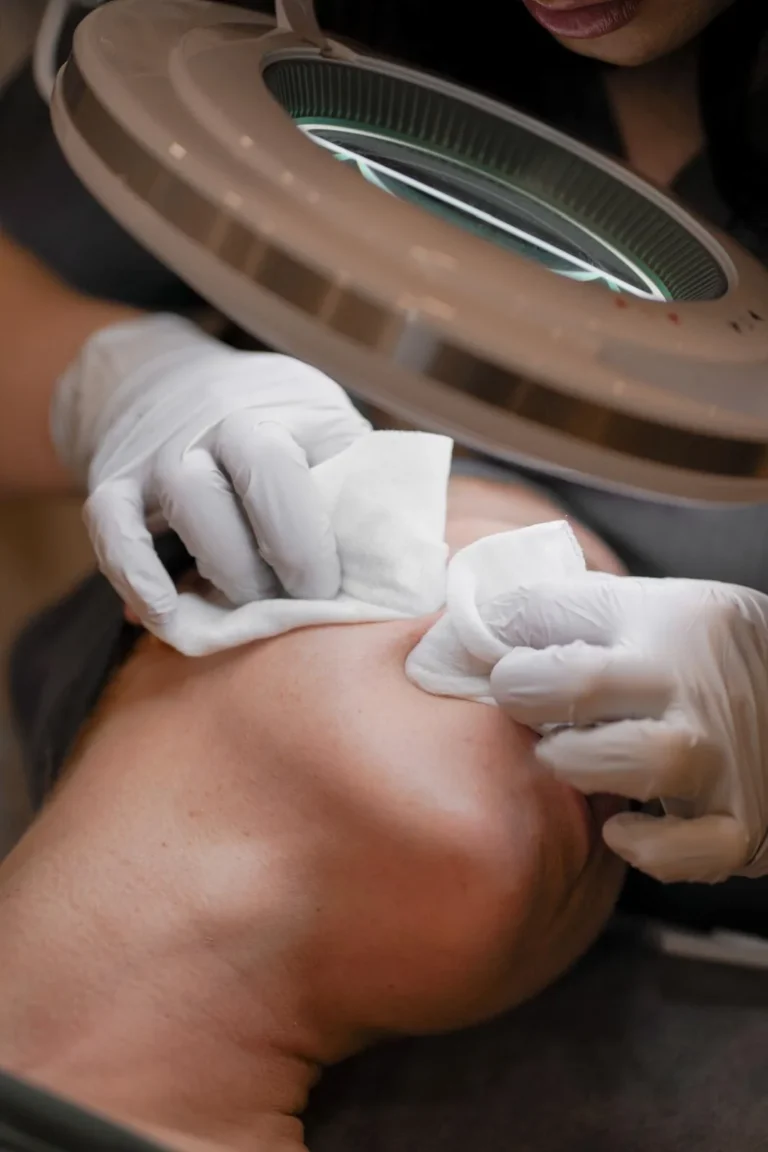
Everyone wants to know how long for facial results to show up, and the honest answer is that you will see two very different timelines. The first of these is the instant glow that you pick up on as soon as you leave the studio; your skin then appears thicker, feels smoother, and has a radiant look that comes about because of thorough cleansing, gentle exfoliation, and the hydration that your esthetician applies during the treatment.
The initial glow is genuine but only lasts for a short time; it generally continues for a few days or up to about a week, the duration depending on your skin type and the way you look after it afterwards. At SI Glam Glow we tell each client that the effect they see in the mirror immediately after a facial is just a preview, not the final result. The more substantial improvements—those relating to texture, tone, and fine lines—take longer since they rely on the skin’s natural renewal cycle.
How Long for Facial Results to Develop: The Cellular Timeline
The immediate glow is only half the story. The real question, how long for facial results to become visible at a cellular level, comes down to skin cell turnover. Your skin is constantly shedding old cells and generating new ones, and this process slows down as we age.
Professional treatments work with this natural cycle to speed it up and improve the quality of the new cells being produced. The timeline below reflects a realistic expectation for most people after a /services/.
Week 1-2: Initial Skin Cell Turnover
In the first two weeks your skin will be getting used to the product. The active ingredients in the facial are promoting a faster rate of cell turnover, so you might observe a more even skin surface and a decrease in dullness. This is the time when any redness or sensitivity that you experienced during extractions or as a result of a deeper exfoliation will subside.
Week 3-4: Visible Texture and Tone Improvements
By the end of weeks three and four the overall effects can be observed. The hyperpigmentation seems to have lightened, the skin texture feels smoother and fine lines look softer. It is at this stage that most clients begin to notice the changes they had been hoping for, even though it is necessary to keep to both your treatments and your home care routine.
Week 5-8: Collagen Production and Deeper Changes
Between weeks five and eight collagen production begins. It is in this stage that the skin becomes firmer and more resilient over time. The results keep on developing, and the improvements noticeable by week eight are of a more structural nature than cosmetic. This kind of fundamental change is the reason why one facial is never sufficient; it is only with a series of treatments that lasting results can be achieved.
Professional Facial Results vs. At-Home Skincare
A common misconception is that an expensive at-home skincare routine can replace professional treatments. The reality is more nuanced: they serve different functions, and the combination of both is what creates lasting results.
What At-Home Products Actually Do
The skincare routine you follow helps to keep the skin’s barrier intact, provides hydration, and includes active ingredients such as retinol, niacinamide, or vitamin C. These products work slowly and are specially designed to be safe and well tolerated when used at home. For example, a well-formulated retinol serum may reduce fine lines and lead to an improvement in skin texture after eight to twelve weeks of consistent use. Vitamin C can help to reduce dullness in four to six weeks. Even though these are real and measurable benefits, they operate within the limits of topical treatment.
What Professional Facials Deliver That Home Care Cannot
Professional treatments are able to reach your skin in a manner that topical products cannot. When having a facial, an esthetician can carry out manual extractions in order to remove the kind of congestion that no product used at home can deal with. The professional exfoliation, whatever form it takes—whether it’s a chemical peel, microdermabrasion, or an enzymatic treatment—removes dead skin cells to a depth and intensity that over-the-counter exfoliants are not designed to achieve. Treatments such as microcurrent facials or radiofrequency devices cause the body to produce collagen via the use of technology rather than chemistry. Certain professional treatments make use of medical-grade serums in concentrations greater than those found in products available in retail outlets, and the esthetician’s technique makes sure of even application and proper penetration.
The key difference: at-home products work on the surface and upper epidermis; professional treatments can reach the dermis and stimulate deeper cellular changes.
How Long Results Last: The Durability Question
It is at this point that the comparison takes on a practical aspect. A customer who relies solely on at-home skincare may achieve steady progress over a period of 12 weeks, but this progress will level off in the absence of professional treatment. If you cease using the product or omit doses, the improvements will halt or even reverse. On the other hand, a customer who has monthly professional facials together with a good at-home routine experiences results that accumulate over time and are more durable. The professional treatment refreshes and enhances what the at-home routine keeps up.
For example, someone using a retinol serum alone might achieve an improvement in fine lines over three months. That same person adding a monthly collagen-stimulating facial (such as microcurrent) might achieve greater improvement in the same timeframe, and the results are more durable because the deeper structural changes support the surface improvements.
The Budget Reality
More expensive at-home products do not necessarily produce longer-lasting results than a regular and inexpensive home care routine combined with professional treatments. What is important is consistency and the fact that the care suits your skin type. On the other hand, a single costly professional treatment without any support from home care will lose its effect quickly. The most economical method is to follow a simple and consistent home routine together with monthly professional facials. This combination leads to results that last and improve over time, while relying on either one alone leads only to temporary or limited improvement.
The Bottom Line
Imagining your home care routine as a form of daily maintenance, professional facials can be seen as periodic resets which enhance all the other things you’re doing; together they produce a synergy that neither one could achieve by itself. The esthetician will be able to suggest products that match your skin type and treatment plan, thus making sure that your at-home care supports what takes place in the studio.
How Often to Get a Facial for Best Results
The best frequency for getting a facial will depend on your skin problems and the kind of treatment you are having; as a general rule, having a facial once a month matches well with your skin’s natural cell turnover cycle, which lasts approximately 28 days, and this timetable ensures that your skin remains in a continuous state of improvement.
When it comes to dealing with particular issues such as acne or hyperpigmentation, a professional could suggest carrying out a more intensive treatment every two or three weeks for a few months before switching over to monthly maintenance. The following is a simple explanation of how frequently you should get a facial if you want the best results:
Consistency matters more than intensity. One facial every few months will give you a temporary glow, but it will not create the lasting changes that a regular schedule supports.
Professional Facial Aftercare Tips
What you do in the 48 hours after a facial has a huge impact on how long your results last. Your skin is more receptive and also more vulnerable immediately after treatment, so gentle care is essential.
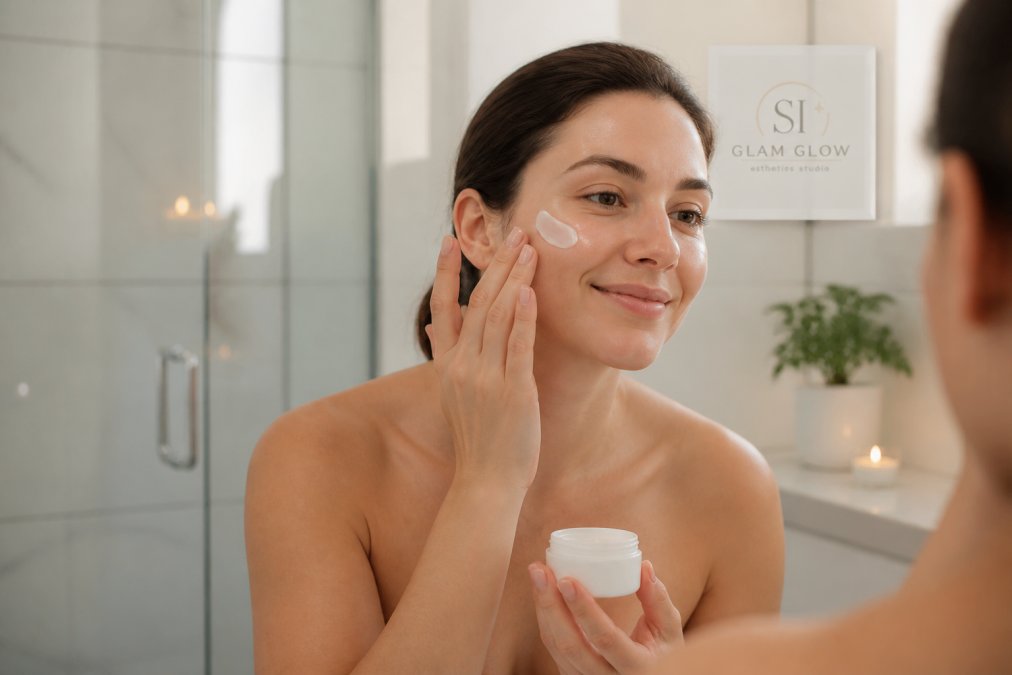
A person gently applying a light moisturizer to clean, glowing skin in a bright, calm bathroom setting after a facial treatment
Skip harsh active ingredients like retinoids or strong acids for at least 48 hours.
Avoid heavy makeup for the rest of the day to let your skin breathe.
Wear sunscreen daily, since fresh skin is more sensitive to sun exposure.
Keep your skin hydrated by drinking water and using a gentle moisturizer.
Do not pick or scrub your skin, even if you notice flaking.
Post-treatment care is where many people undo their results. Following these professional facial aftercare tips will protect your skin and extend the benefits of your treatment.
BioRePeel vs. Traditional Chemical Peels: Timeline Differences
The main difference between BioRePeel and traditional/chemical-peels is the length of the recovery period and how fast results are seen; traditional chemical peels usually involve noticeable peeling and call for several days’ downtime, a factor which discourages a great many people from having them carried out.
BioRePeel is a two-phase peel which acts in a different way: it gives the advantages of a deep peel without causing visible flaking, which is why it is a favourite option among people with busy lifestyles. You are usually able to get back to your normal activities right away and the skin does not shed in the straightforward manner normally linked with older peels. As a result, in practical terms, the time it takes to see visible results is shortened since there is no need to wait for the skin to heal before benefiting from the treatment.
Factors That Affect How Quickly You See Results
The speed at which your skin reacts to professional treatment is influenced by several factors, and if you understand these factors you will be able to set realistic expectations regarding your own timeline.
Age and Cell Turnover Rate
Age is one of the most important factors. In your twenties the skin cells take about 28 days to turn over, but this process slows down quite a bit as you get older. By your forties the turnover period may be 40 to 50 days and by your sixties it can last 60 days or more. As a result a person in their twenties could begin to see noticeable improvements in skin texture within 2 to 3 weeks of having regular facials, whereas someone in their fifties might have to wait 4 to 6 weeks to see the same results. This is not a limitation, it is just a matter of biology. Professional treatments align with the pace at which your skin naturally operates, even though the pace itself changes.
Skin Type and Condition
Age is one of the most important factors. In your twenties the skin cells take about 28 days to turn over, but this process slows down quite a bit as you get older. By your forties the turnover period may be 40 to 50 days and by your sixties it can reach 60 days or take even longer. As a result a person in their twenties could begin to notice visible improvements in skin texture within 2 to 3 weeks of having regular facials, whereas someone in their fifties might have to wait 4 to 6 weeks to see the same results. This is not a limitation, it is just a matter of biology. Professional treatments align with the pace at which your skin naturally operates, even though the pace itself changes.
Lifestyle and Environmental Factors
The things that occur outside the treatment room are just as important as those that take place inside it. Poor sleep reduces the skin’s ability to repair itself, hinders the production of collagen and raises cortisol levels, which in turn can negate the benefits of the facial. Dehydration delays cell turnover and leads to a loss of skin plumpness, causing the results to be less apparent. Diet also has an effect on skin health since foods high in sugar or that are inflammatory can cause breakouts or dullness that counteract the improvements from the treatment.
It is just as important to consider the environment. Sun damage speeds up the ageing of the skin and can cause results to disappear rapidly if you’re not applying sunscreen every day. Exposure to pollution and chlorine also reduces the advantages of the treatment. Stress causes cortisol levels to rise and may lead to breakouts or sensitivity, nullifying any progress made. Although you can’t always control these factors, being aware of them helps to explain why two people following the same treatment schedule might experience different results.
Consistency with Home Care
The routine you follow at home is what connects you with professional treatments. If you omit steps, use the wrong products for your skin type, or give up on your routine after only a few weeks, your results will be greatly shortened. A person who sticks to a regular morning and evening routine and uses the right actives together with sunscreen will notice their results developing and staying over time, whereas someone who is inconsistent will only achieve a temporary glow which disappears within a few days.
The Specific Concern You Are Addressing
Different skin problems do not show results at the same rate. It is common for fine lines and dullness to become better after 3 to 4 weeks of regular treatment. The correction of hyperpigmentation or marks left after inflammation may take 8 to 12 weeks or even longer, the duration depending on how deep the marks are and on how long they have been there. Acne and congestion can be improved quickly if the proper extraction and treatment programme is used, sometimes within 2 to 3 weeks.
Maintaining Your Facial Results Long-Term
The secret to achieving long-lasting results lies in combining professional treatments with a well-thought-out home care routine. Your esthetician will be able to suggest products that match your skin type and deal with your particular concerns. It is the consistency of both the professional treatments and the at-home routine that distinguishes people who look good for a week after a facial from those who are able to keep a healthy glow throughout the year.
At SI Glam Glow, we believe in educating our clients so they understand their skin and how to care for it between visits. Every treatment plan is personalized, which means your timeline for results may differ from someone else’s. That is normal. Skin health is a gradual process, and the best results come from patience and regular care.
If you are curious about which treatment might suit your skin or how long for facial results to develop for your specific concerns, our team is happy to talk through your options and set realistic expectations.
Frequently Asked Questions
How long does it take to see visible results from a professional facial?
Right after your facial you’ll see a noticeable glow, and this is due to the higher level of hydration and better circulation. It usually takes between 2 and 4 weeks for you to see noticeable changes in the texture, tone, and fine lines of your skin, as your skin cell turnover rate speeds up and collagen production goes up. More significant results, particularly in the case of acne or hyperpigmentation, might require 6 to 8 weeks of regular treatment and appropriate aftercare. The results will depend on your skin type, the concerns you have, and the particular facial treatment you get.
How often should I get a facial to maintain results?
It is generally recommended that most people have a professional facial once every 4 to 6 weeks, as this aligns with the skin’s natural 28-day renewal cycle. Having such regular treatments helps to maintain steady collagen production, prevents acne from occurring, and keeps your skin barrier in good shape. If you have specific problems like acne or hyperpigmentation, your esthetician may recommend receiving treatments every 2 to 3 weeks initially, and then extend the interval as your skin improves. The maintenance schedule will depend on your skin type, age, and the particular treatment goals you have.
What should I do and not do after a professional facial?
Make sure that your skin stays hydrated by using mild cleansers and applying sunscreen every day. After your treatment, avoid hot water, strenuous exercise, and being in direct sunlight for 24 to 48 hours. Do not use active ingredients such as retinoids or vitamin C right away; instead, wait three to five days. It’s important not to touch your face, to refrain from wearing heavy makeup, and to avoid using rough scrubs. When you’ve had a more intensive treatment such as a BioRePeel, you should expect some mild peeling; this is normal and forms part of the cellular regeneration process. The esthetician will give you specific aftercare instructions according to your treatment.
Does skin type affect how quickly I see facial results?
Yes, significantly. Oily skin often shows faster visible improvements in texture and pore refinement because exfoliation and extraction work more effectively on active skin. On the other hand, dry skin will usually require more treatments that focus on hydration and therefore may experience a more gradual improvement. For sensitive skin, milder methods are necessary and it may be advisable to reduce the frequency of treatments in order to prevent irritation. Age plays a role too, as younger skin tends to regenerate more rapidly whereas older skin may take longer to show the accumulated results of collagen production. A personal consultation is useful for establishing your realistic timeframe.