
Serving clients throughout Staten Island, Brooklyn & New York City
Last Updated: August 13, 2026
If you’ve been researching skin treatments lately, you’ve probably come across BioRePeel and traditional chemical peels side by side. Both promise smoother texture, improved skin tone, and a more radiant complexion, but they work quite differently. The right choice depends on your skin type, your concerns, and how much downtime you’re willing to accept. At SI Glam Glow, we get questions about biorepeel vs traditional chemical peels almost every week, and the honest answer is: neither is universally better. Each has a real place in a thoughtful skincare plan.
Below, we’ll break down exactly how these treatments differ, who tends to do well with each, and what you can realistically expect.
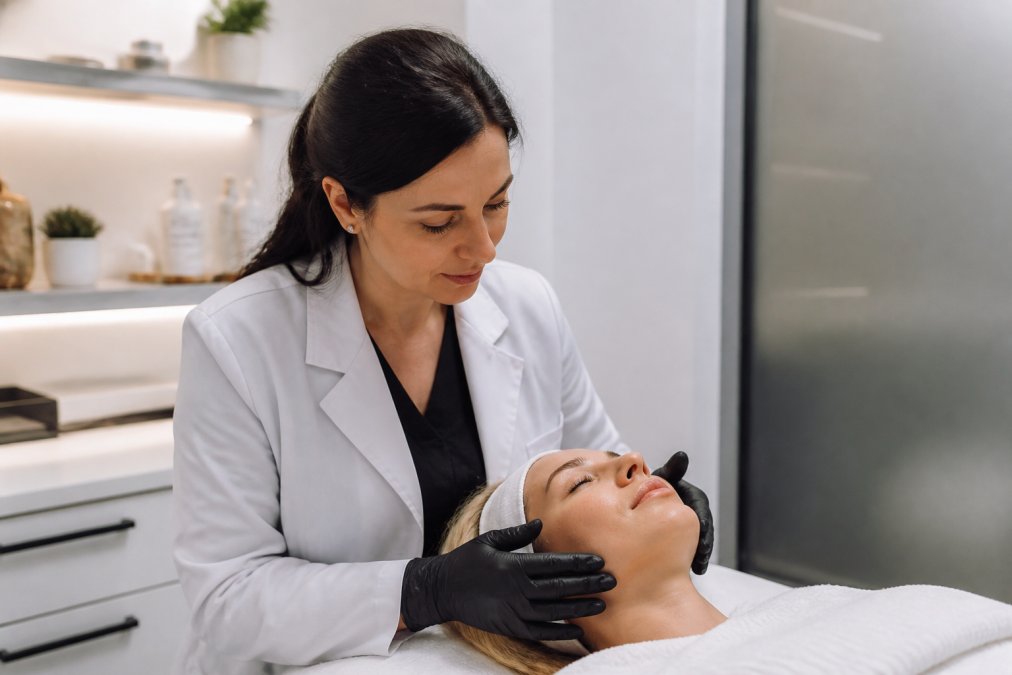
Traditional chemical peels use chemical exfoliant solutions to remove layers of the epidermis, and in some cases the upper dermis, to encourage cell turnover and skin regeneration. Over time, this can improve skin texture, tone, hyperpigmentation, fine lines, and acne scarring.
The depth of the peel determines how dramatic the results are and how much recovery you’ll need.
Superficial peels use mild acids like glycolic acid, lactic acid, or low-concentration salicylic acid to target only the outermost layer of the epidermis. They’re well-tolerated by most skin types, require minimal downtime, and work well for general brightening and mild texture concerns. You might notice some light flaking for a day or two, but most people return to normal activity right away.
Medium-depth peels penetrate further into the epidermis and upper dermis using trichloroacetic acid (TCA). These address more significant concerns like moderate hyperpigmentation, deeper fine lines, and uneven skin tone. Expect several days of visible peeling, redness, and sensitivity.
Deep peels reach the mid-dermis and use stronger agents like high-concentration phenol. They produce dramatic results for severe sun damage, deep wrinkles, and significant acne scarring, but come with substantial downtime and higher risk. Deep peels are typically performed in clinical settings under close supervision.
As documented in the American Academy of Dermatology’s guide to chemical peels, peel selection should account for skin type, Fitzpatrick tone, and individual skin history to reduce the risk of complications like post-inflammatory hyperpigmentation.
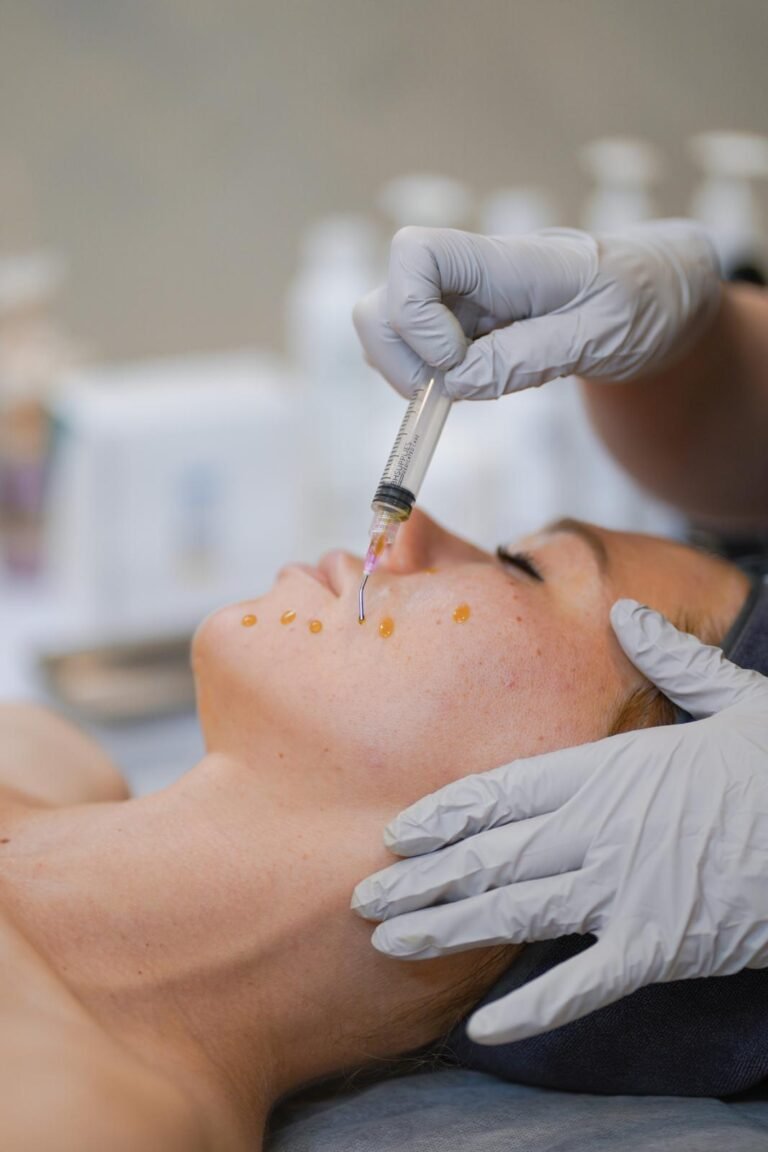
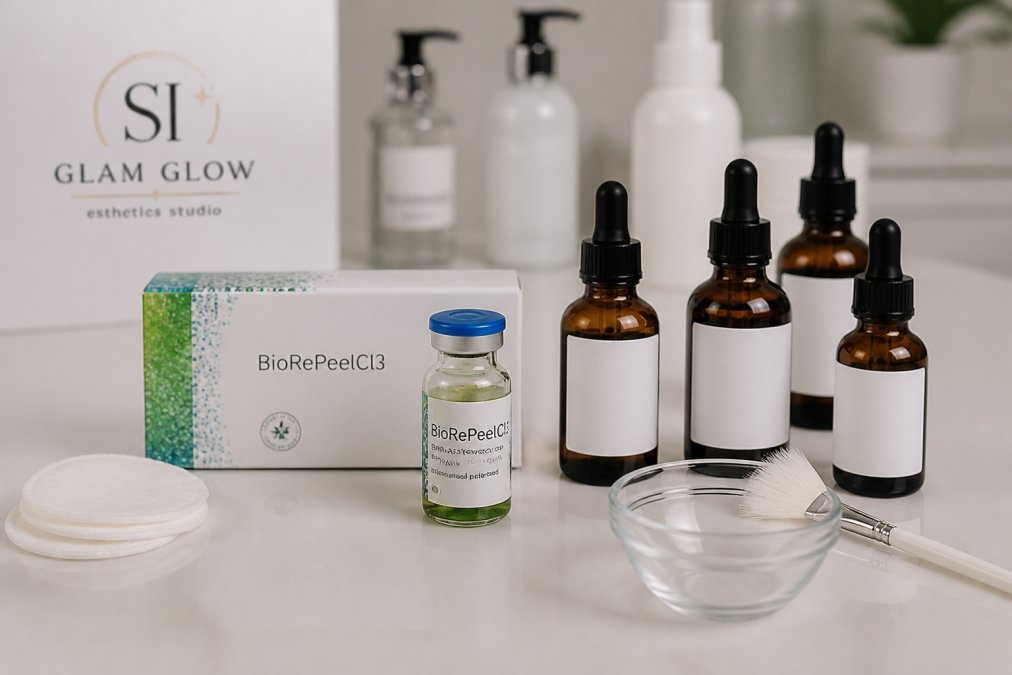
BioRePeel is not a traditional peel. BioRePeel is a biphasic, biostimulating treatment that combines chemical exfoliation with active skin regeneration in a single application, without the prolonged peeling or extended recovery associated with medium-depth traditional peels.
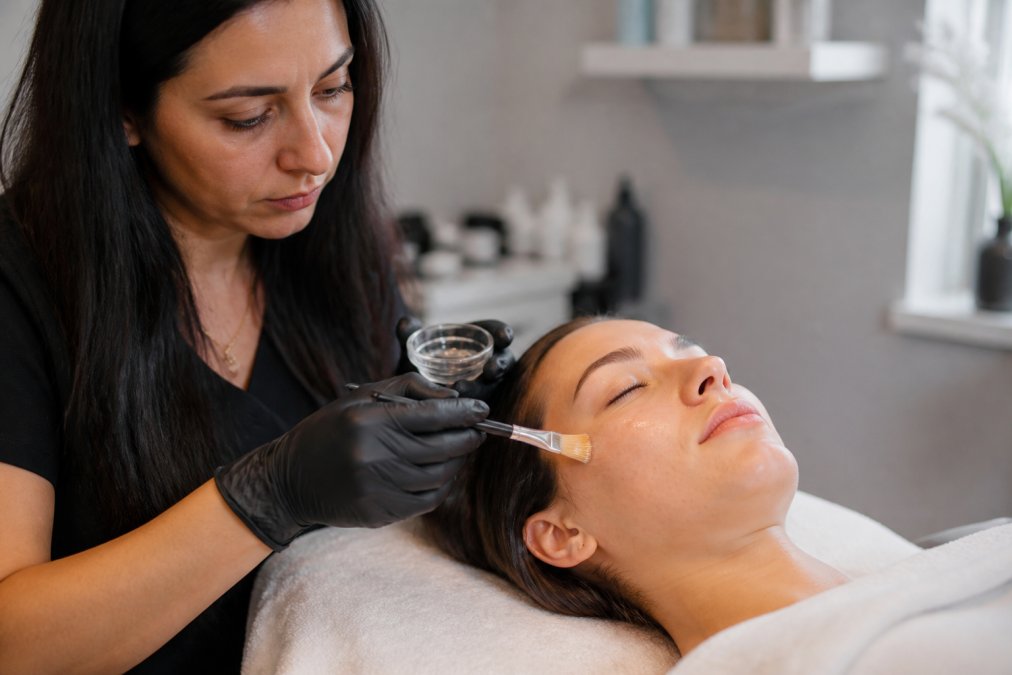
The “biphasic” formula has two phases: one hydrophilic (water-attracting) and one lipophilic (oil-attracting). These work together to deliver active ingredients into the skin’s water-based layers and through its lipid barrier, which sets BioRePeel apart from a standard peel.
The formula contains 35% trichloroacetic acid combined with alpha-hydroxy acids, beta-hydroxy acids, poly-hydroxy acids, amino acids, vitamins, and GABA. The TCA provides exfoliation and drives collagen production, while supporting ingredients nourish and protect the skin barrier simultaneously.
This combination allows BioRePeel to deliver results comparable to a medium-depth peel while producing minimal to no visible flaking for most clients. The skin barrier is being supported at the same time it’s being treated.
According to the International Journal of Dermatology’s overview of biostimulating peels, formulations that combine exfoliation with active biostimulation show favorable outcomes for skin rejuvenation with reduced barrier disruption compared to traditional TCA peels at equivalent concentrations.
Here’s a direct look at how these approaches compare across the factors that matter most.
| Feature | BioRePeel | Traditional Chemical Peel |
|---|---|---|
| Mechanism | Biphasic biostimulation + exfoliation | Chemical exfoliation (depth varies) |
| Key ingredient | 35% TCA + amino acids, vitamins, PHAs | TCA, AHAs, BHAs, phenol (varies by type) |
| Downtime | Minimal to none for most clients | Light: 1-2 days; Medium: 5-7 days; Deep: weeks |
| Visible peeling | Rare; mostly micro-exfoliation | Common, especially medium and deep |
| Skin barrier effect | Actively supported during treatment | Can compromise barrier, especially at depth |
| Suitable for sensitive skin | Generally yes | Superficial: often yes; deeper peels: caution advised |
| Year-round use | Yes | Superficial: yes; Medium/deep: often avoid summer |
| Collagen stimulation | Yes, via biostimulation | Yes, via controlled injury response |
| Best for | Fine lines, texture, radiance, acne scarring, hyperpigmentation | Wide range; depth determines target concerns |
| Sessions needed | Often a series for optimal results | Varies; deep peels may be single treatment |
These treatments serve overlapping concerns through different mechanisms, with different recovery profiles.
Most people experience very little downtime with BioRePeel. The treatment is specifically formulated to minimize disruption to the skin barrier, so the visible flaking and redness you might associate with a traditional peel are not typical.
Immediately after treatment, skin may look slightly flushed or feel tight, usually settling within a few hours. Some clients notice very mild exfoliation in the days following, subtle texture refinement that’s often barely visible.
Practical aftercare points:
BioRePeel is sometimes described as a “no-downtime peel,” which is largely accurate for most skin types, though individual responses vary.
For comparison, a traditional medium-depth TCA peel typically involves 5-7 days of visible skin shedding, significant tightness, and photosensitivity that can persist for weeks.
Aftercare is where many clients either protect their results or accidentally undo them. This applies to both BioRePeel and traditional chemical peels, though specific needs differ by depth.
The core principles are consistent:
For BioRePeel specifically, aftercare is simpler because the skin barrier is less compromised. A gentle cleanser, a nourishing moisturizer, and SPF are typically all you need for the first few days. Traditional medium or deep peels require more intensive aftercare, and your provider will give you a specific post-treatment protocol.
The right treatment depends on what your skin actually needs.
BioRePeel may suit you well if:
Traditional chemical peels may suit you well if:
Contraindications for both treatments:
Both BioRePeel and traditional chemical peels have contraindications that should be discussed before treatment. These include active skin infections, open wounds or lesions, recent use of isotretinoin (Accutane), certain medications that increase photosensitivity, and pregnancy. Anyone with a history of keloid scarring, compromised skin barrier, or specific dermatological conditions should have a thorough consultation before proceeding.
As noted in the American Society for Dermatologic Surgery’s patient safety guidance, a thorough medical and skin history review before any chemical peel procedure is essential to minimize risk and ensure appropriate treatment selection.
This is why a proper skin consultation matters. At SI Glam Glow, every treatment begins with a personalized assessment so the approach is matched to your skin’s actual condition and history.
One practical advantage of BioRePeel is how well it fits into a broader skincare plan. Because it supports rather than significantly disrupts the skin barrier, it can often be combined with or scheduled alongside other aesthetic treatments more easily than deeper traditional peels.
Common combination approaches include:
Traditional chemical peels, particularly at medium depth, generally require more recovery time between treatments and are less easily combined with other active treatments in the same window. Superficial peels are more flexible.
The key principle in combination therapy is always to avoid overwhelming the skin. Spacing treatments appropriately allows the skin’s natural regeneration cycle to work in your favor.
Choosing between BioRePeel and traditional chemical peels comes down to a real conversation about your skin’s history, your goals, and what kind of recovery fits your life. At SI Glam Glow, we offer personalized skin consultations and professional-grade treatments including BioRePeel, microdermabrasion, and a range of customized facial options to help you find what actually works for your skin. If you’re ready to take the next step, book your appointment and let’s figure out the right approach together.
BioRePeel uses trichloroacetic acid (TCA) like some traditional chemical peels, but it works differently. Its patented biphasic technology combines the acid with amino acids, vitamins, and biostimulating ingredients in two separate phases. This allows it to exfoliate the epidermis and support dermal regeneration simultaneously, with far less visible flaking or peeling than a standard TCA peel. So while it shares some chemistry with traditional peels, it behaves quite differently in practice.
BioRePeel downtime is notably minimal. Most clients experience little to no visible peeling, with mild sensitivity or slight flaking that typically resolves within a day or two. Traditional chemical peels vary widely: a light peel may cause a few days of flaking, while a medium-depth peel can mean five to seven days of more noticeable skin shedding and redness. Deep peels require significantly longer recovery. BioRePeel is often preferred by clients who need to stay socially active shortly after treatment.
BioRePeel is formulated to be suitable for a broad range of skin types, including sensitive skin and darker skin tones that carry a higher risk of post-inflammatory hyperpigmentation with traditional peels. Its biostimulation approach supports the skin barrier rather than aggressively disrupting it, which makes it a gentler option for many clients. That said, a professional skin assessment before any peel treatment is always recommended to confirm suitability based on your individual skin history and concerns.
The core aftercare principles overlap: avoid direct sun exposure, skip active exfoliants for several days, keep skin hydrated, and use SPF daily. After a traditional peel, especially medium-depth, aftercare is more intensive, you may need to avoid makeup, certain cleansers, and physical activity for several days. BioRePeel aftercare is generally simpler due to minimal peeling, though photosensitivity still applies. Your esthetician will give you specific guidance based on which treatment you receive.
BioRePeel works well for fine lines, uneven skin texture, mild hyperpigmentation, dullness, acne scarring, and clients who want skin rejuvenation with minimal disruption. Traditional chemical peels cover a wider range of depths: light peels address surface texture and radiance, while medium peels can target deeper hyperpigmentation, more pronounced acne scarring, and moderate signs of aging. The right choice depends on your skin concerns, tolerance for downtime, and how your skin responds to treatment.
Book a personalized consultation at our Staten Island studio and get a skin plan built around your goals.
Book a Consultation