

Serving clients throughout Staten Island, Brooklyn & New York City

You know the feeling. You wash, you pat dry, you look in the mirror under Staten Island bathroom lighting, and the skin still doesn’t look as clean as it should. The texture around the nose, chin, or forehead stays busy, makeup sits a little unevenly, and those dark dots keep coming back even when your routine seems careful.
That’s usually where how to treat clogged pores becomes less about chasing a quick fix and more about building a routine the skin can live with. Clogged pores are common, they’re stubborn, and they respond best to steady maintenance, not harsh scrubbing or dramatic at-home extractions.
Clogged pores often show up as blackheads, tiny white bumps, congestion along the nose and chin, or a rough, uneven surface that catches light in a way you do not like. The skin may also look dull or feel slightly grainy, even when it has just been cleansed. That happens when the pore is holding onto a mix of sebum, dead skin cells, product residue, and environmental debris instead of clearing itself smoothly.
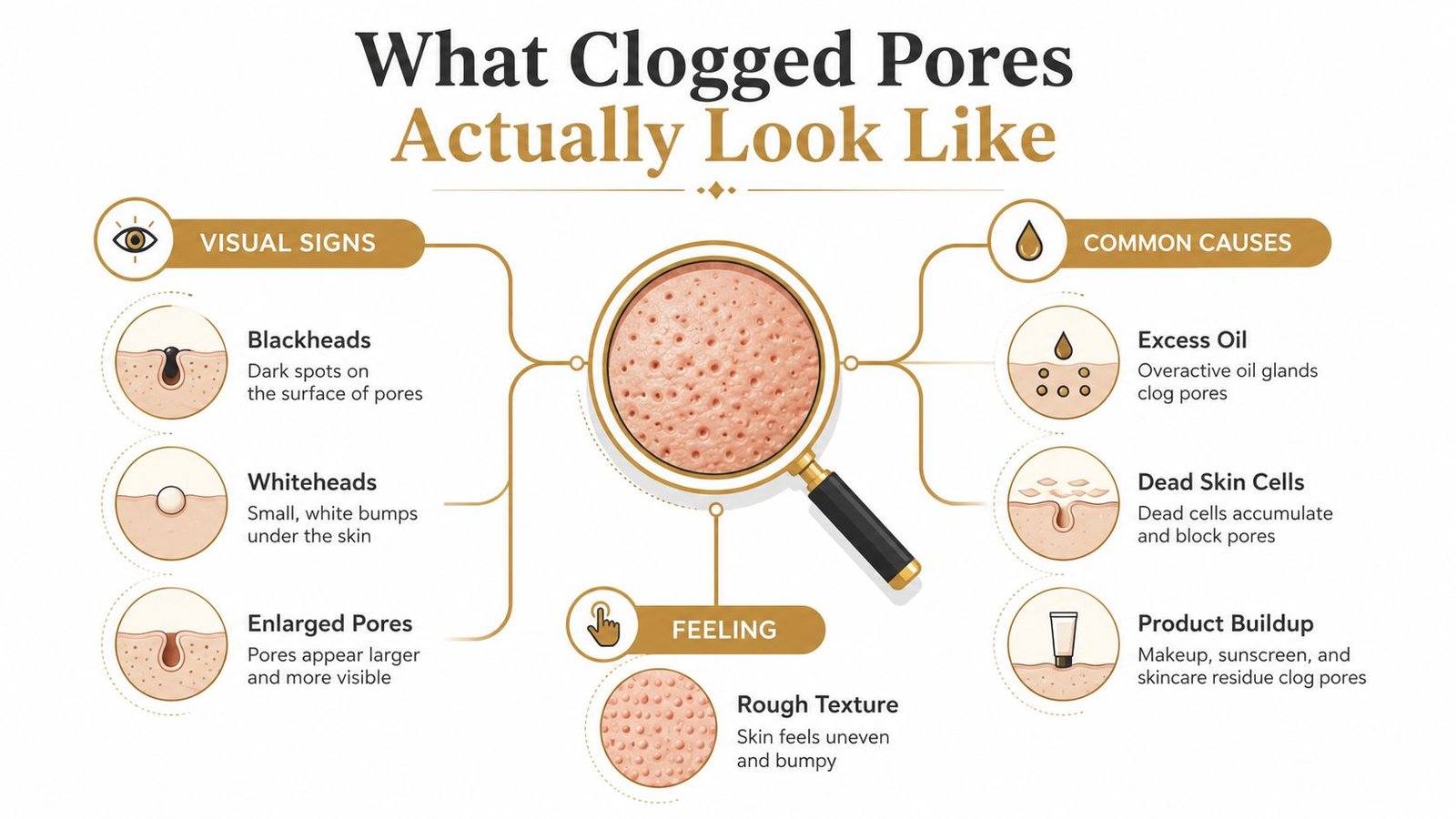
A pore does not clog because it is lazy, and it does not need to be “shrunk” to behave better. It gets blocked when material builds up inside the opening and stays there long enough to compact. Clogged pores are a common reason acne develops, and acne affects many people in the U.S. Cleveland Clinic.
That is why texture concerns are usually handled as a maintenance issue, not a one-time cleanup. A pore can look clearer after cleansing, then congest again if the same buildup pattern keeps repeating. The goal is to reduce what settles in the pore and make it harder for that cycle to restart.
Heavy makeup, sunscreen residue, oil that sits too long on the skin, and skin care that is too rich for your type can all contribute to the look of congestion. Rough cleansing habits can do the same, especially when they leave the barrier irritated and more reactive. The result is often skin that feels clean for a moment, then looks congested again by the end of the day.
A calmer routine usually works better than aggressive cleanup. In a private one-on-one esthetics studio on Staten Island, that often means reading the skin closely, choosing treatments that match the level of buildup, and keeping the approach gentle enough that the barrier is not pushed into more oiliness or irritation. The aim is smoother-looking skin and a pore that is less likely to fill up again right away.
A steady home routine does most of the heavy lifting. The American Academy of Dermatology recommends cleansing twice daily to help unclog pores, prevent new clogging, and reduce oiliness, and it advises using warm water with a gentle, pH-balanced cleanser AAD. That’s the kind of consistency that keeps congestion from stacking up day after day.
On makeup or sunscreen days, a second cleanse at night can help remove residue more thoroughly. Cleveland Clinic recommends non-comedogenic cleansers, cosmetics, and moisturizers, and it also points to retinol and salicylic acid because they help remove the dirt, oil, and debris that build up inside pores Cleveland Clinic. The idea is not to strip the skin, but to keep the pore opening from becoming a catch-all for buildup.
If your skin gets dry or irritated, the AAD notes that you can alternate a salicylic-acid cleanser with a milder cleanser. That’s a practical adjustment, not a failure. Skin that stays calmer usually responds better over time than skin that’s being pushed too hard.
Chemical exfoliation and retinoid-style support are more useful than aggressive scrubbing for most congestion-prone skin. A 2022 expert round-up in Cosmopolitan UK highlighted AHAs, BHAs, and retinol as the strongest ingredient combination for pore control, with salicylic acid described as helping reduce sebum production, unclog pores, and improve texture Cosmopolitan UK. That aligns with the clinical advice above, and it’s why a routine needs time to work.
Practical rule: consistency supports clearer-looking pores better than occasional deep-cleaning marathons.
The skin usually prefers a routine it can tolerate every week over one dramatic reset that leaves it red, tight, and overreactive.
At home, the most dependable option is chemical exfoliation, not aggressive physical rubbing. Dermatology guidance cited in consumer beauty materials recommends starting exfoliating acids once weekly and only moving up to 2 to 3 times per week if the skin stays calm and doesn’t turn red or irritated Benefit Cosmetics. That pacing matters, especially if your skin already leans sensitive.
In a private Staten Island treatment room, the conversation shifts from maintenance to customization. A licensed esthetician can choose among dermaplaning for manual exfoliation and vellous hair removal, diamond-tip microdermabrasion for surface smoothing, hydrodermabrasion for hydration-focused exfoliation, or BioRePeel for a skin-renewal peel. Each can improve the appearance of texture and congestion, but each works differently, so the skin’s tolerance and goal determine the fit.
| Method | Where It Happens | Best For | Typical Cadence |
|---|---|---|---|
| Gentle AHA or BHA care | Home | Ongoing pore maintenance and surface refinement | Weekly at first, then adjusted as tolerated |
| Retinol support | Home | Long-term texture support and congestion-prone skin | Consistent routine use as tolerated |
| Dermaplaning | In studio | Smoother-looking skin and removal of surface buildup | Periodic, based on skin response |
| Diamond-tip microdermabrasion | In studio | Dullness, rough texture, and visible congestion | Scheduled maintenance visits |
| Hydrodermabrasion | In studio | Congested skin that also wants hydration support | Periodic, customized to skin needs |
| BioRePeel | In studio | Skin renewal with a peel-based approach | Planned with your esthetician |
If you’re comparing options in Staten Island, one private one-on-one treatment path that can support this kind of care is SI Glam Glow, where the protocol is shaped around your skin’s condition rather than a one-size-fits-all facial menu. The point is to match the method to the skin, not to chase the strongest sensation.
Professional extractions are most helpful when the skin has already been softened and prepped. In a controlled setting, a licensed esthetician can work one area at a time, use the skin’s response to guide pressure, and keep the process focused on appearance and comfort. That’s very different from squeezing at home, which often leaves the area angrier and makes congestion look worse.
Extractions are rarely the first step. The skin usually responds better when cleansing, exfoliation, and softening have already done some of the work. Once the pores are ready, controlled removal can support the appearance of clearer-looking skin without the roughness that comes from forcing plugs out too early.
The bigger trade-off is simple. If the skin is dry, inflamed, or easily reactive, more pressure doesn’t equal better results. It usually means more irritation, more redness, and a longer recovery for the barrier.
A private extraction session should feel measured, not rushed. The esthetician reads the skin first, then chooses whether to focus on congestion, hydration, or calming support after the extraction work. That usually means the skin is treated area by area, then soothed with steps that help it look calmer and feel more comfortable.
For readers who want a deeper look at this kind of care, the studio’s deep cleansing facial approach is outlined in this overview of deep pore cleansing facials. Extractions can be part of a plan, but they work best as one layer in a broader maintenance routine.
Social media loves a quick fix, but the skin usually prefers restraint. Pore strips, clay masks, oil cleansing, silicone scrubbers, and suction devices all have a place only if they’re used carefully and not treated like everyday essentials. The main question is whether a tool supports your routine or just creates a dramatic moment.
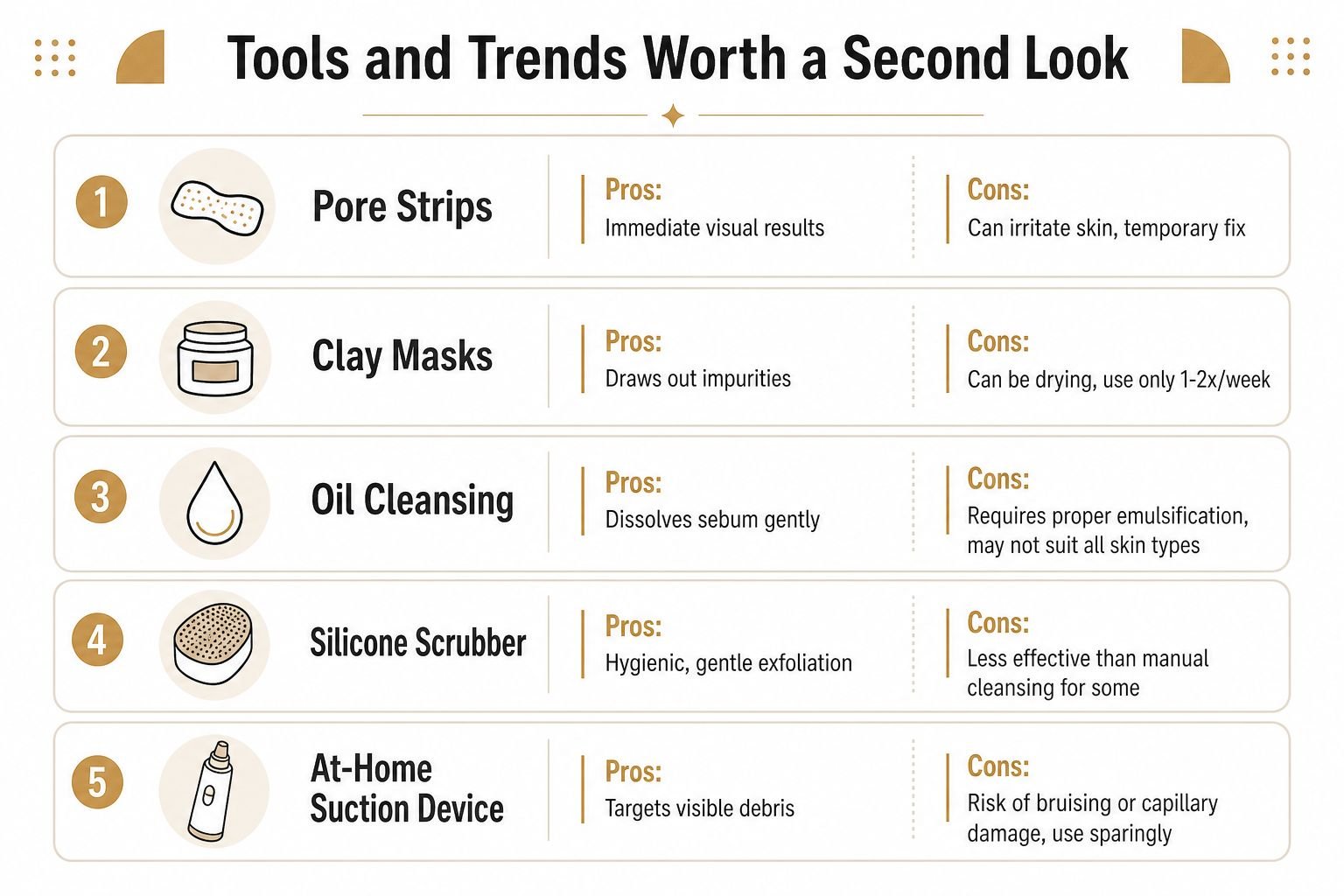
Healthline’s guidance for pore strips is very specific, wet the strip, leave it on for 5 to 10 minutes, peel it away slowly, then rinse with warm water to remove leftover adhesive Healthline. Westlake Dermatology adds that they should be used no more than once per week, followed by gentle cleansing and a non-comedogenic moisturizer Healthline. They can remove surface debris visually, but they’re not a substitute for regular cleansing and exfoliation.
Clay masks can be useful when the skin feels oily or crowded, but they should stay occasional. Oil cleansing is a smart first cleanse when you’ve worn sunscreen or makeup, because it helps dissolve residue before the second cleanse. Silicone scrubbers can offer gentle massage and cleansing support, though they’re still secondary to a solid cleanser and a calm hand.
Keep the skin comfortable first, then layer in tools if they actually help.
At-home suction devices deserve the most caution. They may look satisfying, but they’re easy to overdo, and the skin pays for that with irritation. If you want to see what a professional blackhead-focused session looks like, the studio’s blackhead removal facial is a more controlled way to approach visible congestion without turning your bathroom into a battle zone.
The best pore care feels repetitive in a good way. You do a few things consistently, then let your skin tell you whether it wants more or less. That’s how clogged pores stay manageable without turning your routine into a constant correction project.

A practical rhythm starts with a gentle morning cleanse and an evening cleanse every day. Add exfoliation only as your skin tolerates it, and keep sunscreen in the mix with an oil-free formula so you’re not layering extra residue onto already-congested skin Medical News Today. On the days you wear makeup, remove it fully before bed.
Weekly maintenance can include:
A professional facial cadence depends on your skin, not a fixed calendar. In a Staten Island consultation, a licensed esthetician can decide whether your skin needs exfoliation, extractions, hydration, or a slower maintenance pace. That flexibility matters more than chasing the same treatment every time.
Hair products that travel to the hairline, sweaty post-workout skin left untouched too long, and sleeping in makeup all make congestion harder to manage. The fix is boring, but it works, keep the face clean, keep the tools clean, and don’t over-cleanse out of frustration.
Simple checklist: cleanse morning and night, exfoliate only as tolerated, protect with oil-free sunscreen, and book professional support when congestion starts to outpace your home routine.
Clogged pores can develop when oil, dead skin cells, makeup, sunscreen, and other debris build up around the pore opening. Hormonal changes, product buildup, and over-exfoliation can also make congestion more noticeable.
Mild congestion may improve with a consistent skincare routine, but stubborn blackheads and recurring clogged pores often need more targeted care. Gentle cleansing, appropriate exfoliation, and professional extractions may help improve the appearance of congestion over time.
The best facial depends on your skin type, sensitivity, and level of congestion. A customized deep-cleansing facial may include cleansing, exfoliation, extractions, hydration, and calming steps selected for your skin.
Yes, a licensed esthetician may perform professional extractions when appropriate. The goal is to clear visible congestion carefully while minimizing unnecessary pressure and irritation.
There is no one schedule that works for everyone. How often you book a facial depends on how quickly your skin becomes congested, how sensitive it is, and how it responds to exfoliation and extractions. A customized maintenance plan usually makes more sense than a fixed schedule.
Yes. Using too many scrubs, acids, or active products can irritate the skin barrier and make the skin feel more sensitive or inflamed. More exfoliation is not always better. A balanced routine is usually more helpful than trying to aggressively “scrub pores clean.”
It is best to avoid squeezing, picking, or repeatedly pressing at blackheads and blemishes. This can increase irritation and may lead to visible marks. When extractions are appropriate, having them performed professionally is generally a more controlled option.
Depending on your skin, ingredients such as salicylic acid, gentle exfoliating acids, and non-comedogenic moisturizers may help support clearer-looking pores. Retinol products may also be useful for some people, but they should be introduced gradually and used according to your skin’s tolerance.
Pore strips may temporarily remove some visible surface debris, but they do not address why congestion keeps forming. They can also be irritating if used too often or on sensitive skin.
Yes. Sensitive skin can still become congested, but it usually benefits from a gentler approach with less friction, less heat, and carefully selected exfoliation. Treatment should be adjusted to the skin’s condition rather than using an aggressive deep-cleaning routine.
Consider seeing a dermatologist if congestion is persistent, painful, inflamed, worsening, or not improving with a consistent routine. A dermatologist can evaluate medical skin concerns, while an esthetician can support the cosmetic appearance and comfort of the skin.
SI Glam Glow offers customized facial treatments in Staten Island for clients concerned about clogged pores, blackheads, excess oil, and uneven-looking texture. Your treatment can be adjusted based on your skin’s current condition and sensitivity.
If you’re in Staten Island and dealing with clogged pores, blackheads, or uneven texture, SI Glam Glow offers customized facial treatments, professional exfoliation, and personalized aftercare guidance. Book your facial and let your esthetician recommend the right approach for your skin.
Book a personalized consultation at our Staten Island studio and get a skin plan built around your goals.
Book a Consultation