
Looking for a Staten Island facial and not sure which one to book? There is no single right answer. There is the treatment that matches what your skin is doing right now, and a lot of very good facials that would be the wrong choice for you today.
This page is a decision guide, not a menu. Find the concern that sounds most like your skin and it will point you to the facial in Staten Island built for it — including the times the honest answer is to start somewhere gentler. Locals often shorten it to an SI facial; either way, the choice comes down to your skin rather than the name.

Searching for a Staten Island facial usually turns up whichever treatment is being marketed hardest that year. That is not the same question as which one your skin needs, and the two answers are often different.
A facial is a tool. The strongest one is not the best one if your barrier is compromised. The most advanced device is not the best one if your actual problem is congestion. The most popular treatment on the menu is not the best one if it targets a concern you do not have.
The useful question is narrower and much easier to answer: what is your skin doing right now, and which treatment is built for that? Everything below is organised around that question.
How to judge a facial
Find the line that sounds most like your skin. Each one links to the Staten Island facial built for that concern, so you can read the detail before you commit to anything.
More than one line sounds like you? That is normal, and it is the point at which a short conversation beats guessing.
Nearly every facial belongs to one of six families. Knowing which family you need narrows sixteen treatments down to two or three very quickly.
Steam, extractions and thorough cleansing. Built for congestion, blackheads and breakouts rather than for glow.
Removes dull surface buildup, mechanically or with acids. The family to look at when skin looks flat or feels rough.
Exfoliation paired with an oxygenation step and a targeted infusion. Visible results with little to no downtime.
Works on muscle tone and tension rather than the skin surface. For definition and firmness rather than clarity.
Supports the barrier instead of challenging it. The right family for reactive, red or dehydrated skin.
The same care applied beyond the face, or built around a specific group’s concerns.
These apply wherever you book, including here. A studio that answers them readily is usually the one worth booking with.
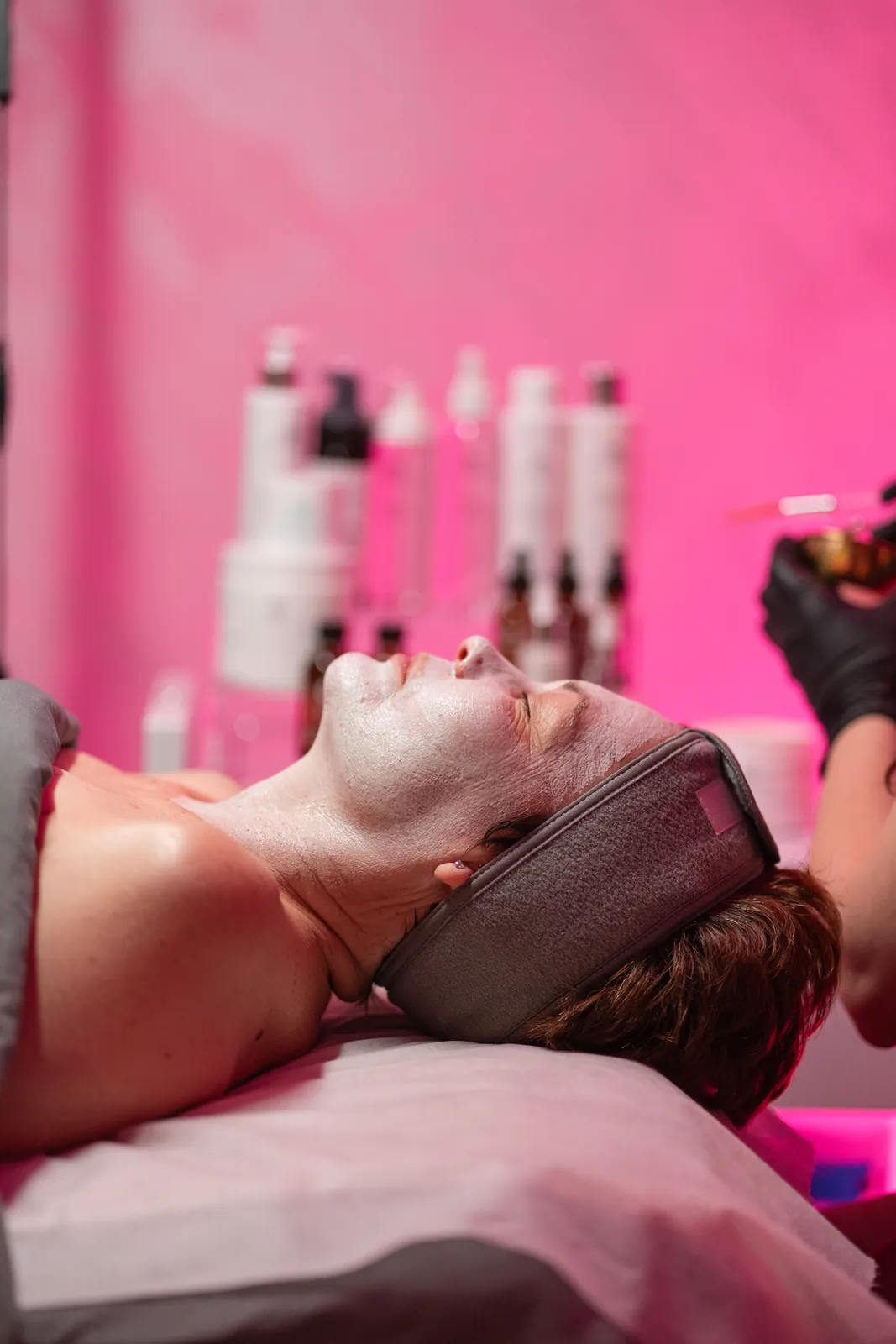
That is the normal position, not a gap in your knowledge. Most people arrive knowing what bothers them about their skin but not which treatment addresses it, and that is exactly the problem an esthetician is trained to solve.
A consultation costs you a short appointment and removes the guesswork entirely: your skin is assessed in person, and the recommendation comes from what is actually in front of someone rather than from a page.
You are also welcome to browse every treatment with full pricing first, if you would rather narrow it down yourself.
Answer a few questions and get pointed to the treatment that fits your skin, or see the full list with pricing.
Find Your FacialOur Staten Island studio welcomes clients from across the borough, Brooklyn, and New York City looking for a facial in Staten Island that actually suits their skin.
Questions about any individual treatment — what it includes, downtime, aftercare and pricing — are answered on that treatment’s own page and on the services page.
SI is simply the local shorthand for Staten Island, so an SI facial and a Staten Island facial mean the same thing. It is not a treatment type or a technique. Whichever way you search for it, the useful question is still which treatment matches your skin concern, which is what the guide above is organised around.
It depends, and any studio claiming otherwise is selling rather than advising. A facial is a tool built for a particular job: the treatment that transforms congested skin can irritate reactive skin, and the one that suits dullness will do very little for pigmentation. The best facial is the one matched to what your skin is doing now, which is why this page is organised by concern rather than by a ranking.
Pick the one that bothers you most and lead with that. Trying to address congestion, pigmentation, sensitivity and fine lines in a single appointment usually means doing each of them poorly. A treatment aimed squarely at your main concern produces a better result than one spread across four, and the others can be sequenced into later visits.
Most treatments fall into six families: cleansing, which handles congestion through steam and extractions; exfoliating, which removes dull surface buildup; oxygenating, which pairs exfoliation with an oxygen step and infusion; lifting and toning, which works on muscle tone rather than the skin surface; calming and hydrating, which supports the barrier for reactive or dehydrated skin; and body or specialist treatments built for the back, for men, or for teenage skin. Identifying the family first narrows sixteen options down to two or three.
Not inherently. Price usually reflects treatment length, technology and product cost rather than how well something suits you. An advanced device aimed at the wrong concern will underperform a simpler treatment aimed at the right one. Advanced treatments are worth it when your concern genuinely calls for what they do, which is a question of fit rather than of budget.
If a specific concern is bothering you, book the treatment built for that concern rather than something generic. If nothing in particular is wrong and you want a thorough reset, a classic European Facial is a sensible starting point because it covers the fundamentals without committing you to anything aggressive. Either way your esthetician will adjust the strength on the day.
Yes, and it is worth saying so when you book. First appointments generally start gentler, both because your skin has no track record with professional treatment and because your esthetician learns how it responds. Nothing in this list is closed to first-timers, though a few of the stronger options are better as a second or third visit rather than a first.
You will be told before anything starts, along with what would suit you better. Skin can be unsuitable on a given day for ordinary reasons: an active breakout, sunburn, a recent treatment, or a strong active in your routine. Being redirected is a good outcome rather than a wasted trip, and it is a great deal better than a treatment your skin was not ready for.
It depends on the concern rather than the treatment. Dullness and congestion often improve visibly in one visit, because both come from something sitting on the surface. Uneven tone, textural irregularity and scarring build up over time and improve the same way, so they realistically need several sessions spaced appropriately. You should be told which category yours falls into before you book, not after.
Three to five days beforehand is the sweet spot for most treatments. That gives your skin time to settle completely while results are still at their best, and leaves room if your skin reacts more than expected. Booking the morning of an event is the one timing we would talk you out of, whichever treatment you choose.
Tell us what your skin is doing and we will point you to the treatment built for it. If you would rather have it looked at in person first, a consultation does exactly that.