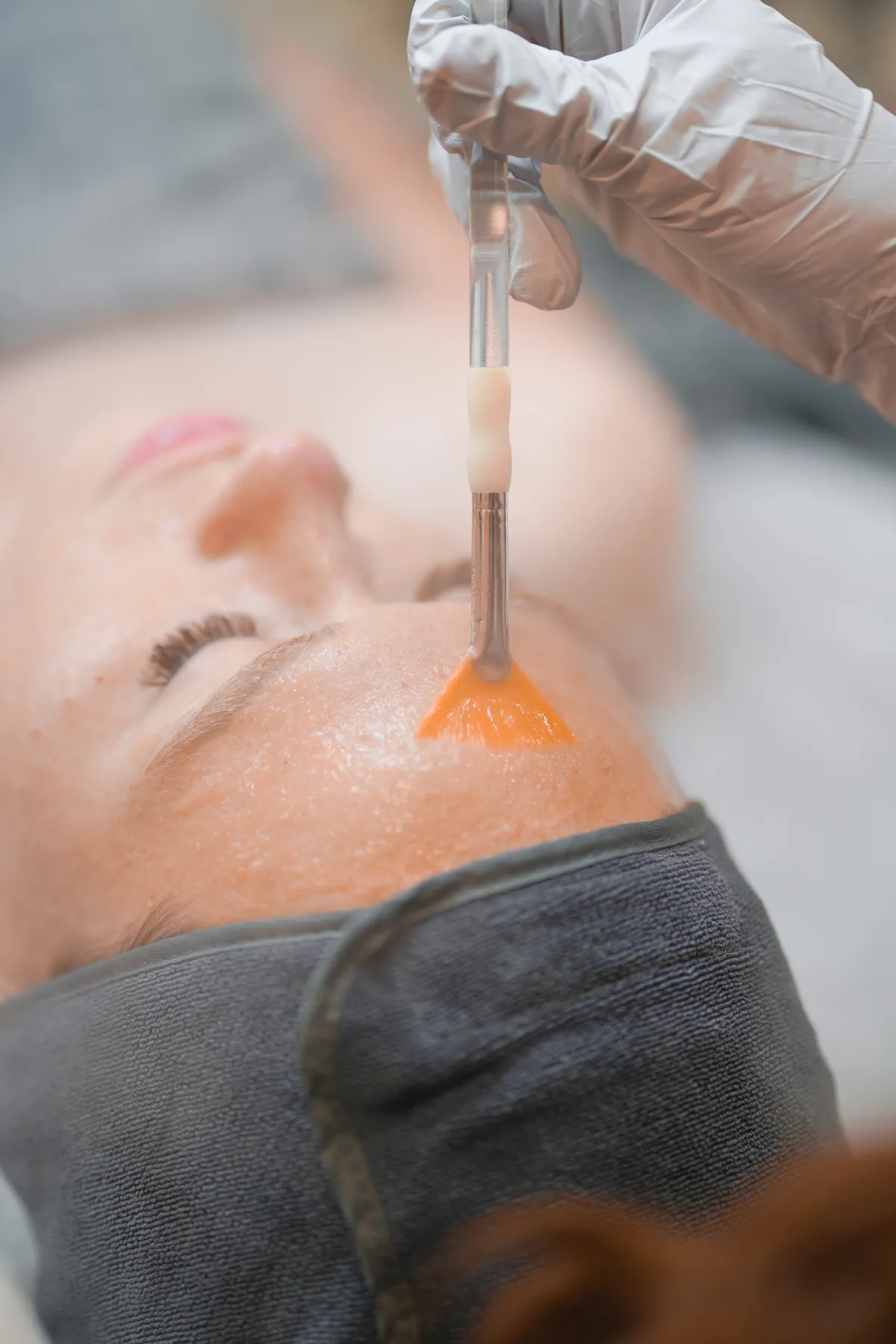
Skin that looks dull, feels rough, or lacks its usual glow often has a buildup of dead surface cells. Even with a good skincare routine, this buildup can leave the complexion uneven, textured, or less refreshed.
Exfoliation removes dull surface buildup, making an exfoliating facial a great option for dull or rough skin. However, not every type works the same. Treatments fit different skin types, concerns, and sensitivity levels.
This page explains the differences between our exfoliation treatments and helps you find the right option for your skin. If you prefer personal guidance, we can help you choose based on your skin and goals.
Healthy skin reflects light evenly, and that even reflection is what we read as radiance. Dullness is what happens when the surface stops being smooth enough to do it — light hits an uneven layer of dead cells and scatters in every direction instead of bouncing back.
Your skin sheds those cells continuously and replaces them from below. That cycle takes roughly a month in your twenties and slows steadily from there, which is the single biggest reason skin that never looked dull suddenly does. Nothing has gone wrong; the shedding has simply fallen behind the production.
Several things slow it further: winter air and indoor heating, dehydration, poor sleep, sun damage, and heavy occlusive products that sit on the surface. The result is the same in each case — a layer that should have gone is still there, muting everything underneath it.
This is why dead skin removal genuinely changes how skin looks rather than just how it feels, and why the improvement is visible immediately rather than after weeks of use.
What Causes Dullness
Almost every exfoliating facial falls into one of these three categories. They are not interchangeable, and the right one depends far more on your barrier condition than on how dull your skin looks.
Physical removal
Acid-based
Lowest intervention
Dullness is a symptom, not a skin type. The better question is what’s causing it. Find the description below that sounds most like your skin.
Not sure which description fits? That’s exactly what personalized guidance is for.
People use these three interchangeably, but they point to different problems and different treatments. Working out which one you actually have is the most useful thing you can do before booking.
A radiance concern. Skin may look flat, tired, or less luminous even when it feels relatively smooth.
Dead surface buildup, dehydration, and environmental stress can all contribute. Gentle exfoliation and a brightening facial focused on hydration may help restore a fresher, brighter-looking appearance.
A texture concern. Skin may feel uneven to the touch, catch on makeup, or have visible dry, flaky areas.
Mechanical exfoliation such as dermaplaning or microdermabrasion can be helpful when surface texture is the main concern, depending on your skin type and sensitivity.
A surface irregularity concern. Visible pores, congestion, bumps, or shallow acne marks can make the skin appear less smooth.
Because uneven texture can have several causes, the right approach depends on what is creating it. Some clients may benefit from a series of treatments rather than a single facial.
Over-exfoliation can leave skin looking dull, tight, or reactive — often leading people to exfoliate even more. Knowing when to stop is just as important as choosing the right treatment.
If several of these signs sound familiar, your skin may need recovery before another exfoliating treatment. A skin assessment can help determine the right next step.
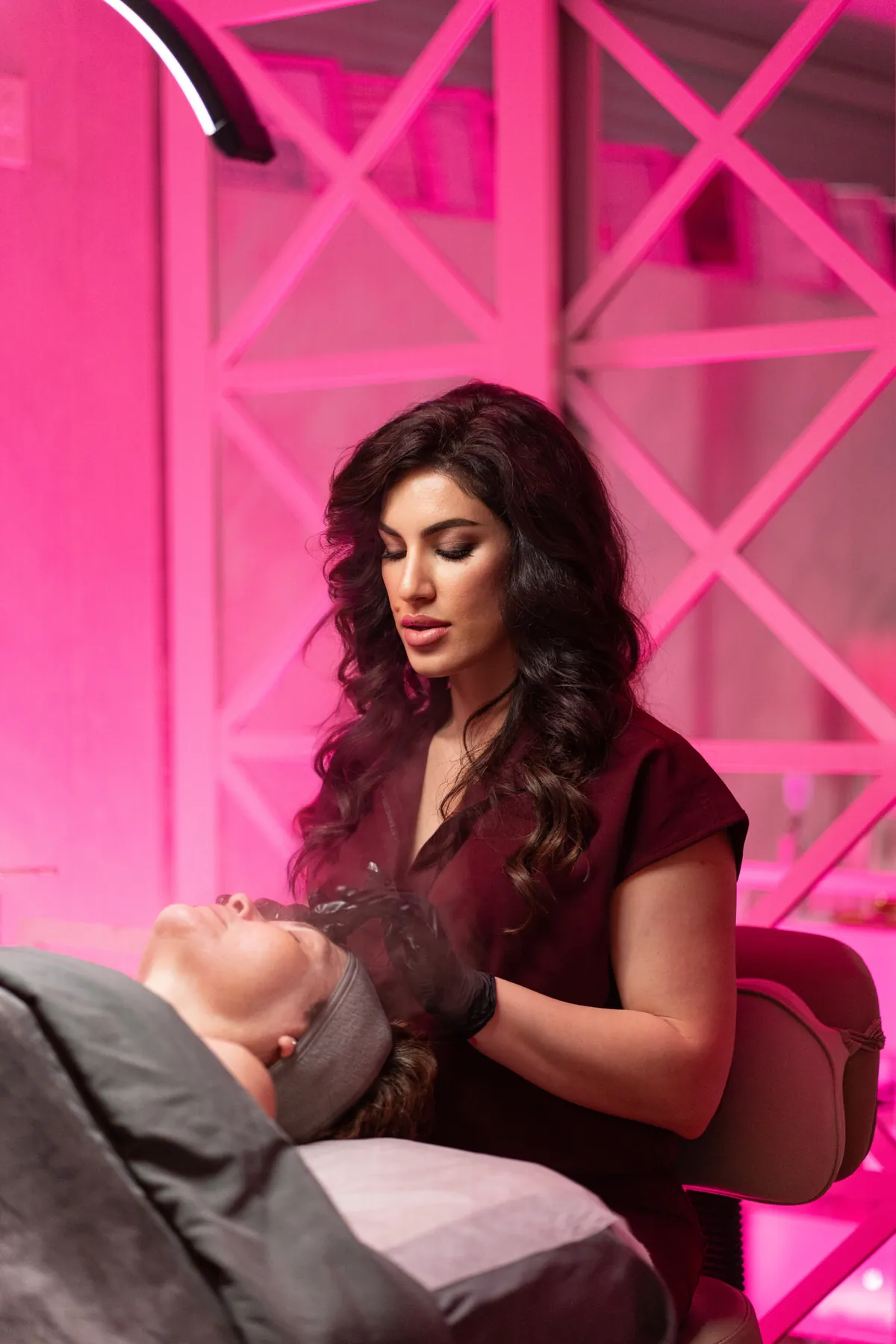
Skin often feels smoother and looks more refreshed after exfoliation because dull surface buildup has been removed.
Skin may feel softer and makeup can apply more evenly. Hydrating products may also feel easier to layer onto a freshly exfoliated surface.
Surface buildup gradually returns as your skin continues its natural renewal cycle. That is normal and does not mean the treatment stopped working.
Concerns such as uneven-looking tone or texture may benefit from a consistent treatment plan rather than a single appointment.
Exfoliation cannot erase deep scarring, significant wrinkles, or permanently brighten the skin. Results depend on your skin, the type of exfoliation used, and the concern being addressed.
Our Staten Island studio welcomes clients from across the borough, Brooklyn, and New York City seeking personalized facials and professional exfoliation treatments.
Questions about any individual treatment — what it includes, downtime, aftercare, and pricing — are answered on that treatment's own page, linked throughout and listed on the services page.
This is common enough to be worth taking seriously, and the answer is usually that you are exfoliating too much rather than too little. An over-exfoliated barrier produces a flat, tired, slightly waxy appearance that looks very like the dullness caused by build-up, so people respond by exfoliating harder and the cycle continues. Other possibilities are that you are treating a hydration problem as a build-up problem, or using a type of exfoliation that does not match what your skin needs. If your skin feels tight after cleansing or stings with products that used to be fine, stop exfoliating and have it assessed.
Mechanical exfoliation physically lifts or abrades dead cells away using a blade, crystals, or suction, and gives the most immediate smoothness. Chemical exfoliation uses acids to loosen the bonds holding dead cells together so they release without friction, which reaches deeper and suits uneven tone and pigmentation. Enzymatic exfoliation uses enzymes that digest only dead surface protein, making it the gentlest of the three and the hardest to overdo, at the cost of working more gradually. They are not interchangeable, and the right choice depends more on your barrier condition than on how dull your skin looks.
No, and confusing the two leads people to the wrong treatment. Dryness is a lack of oil and generally feels tight or flaky. Dullness is about how light reflects off the surface, and skin can be dull while producing plenty of oil. There is also dehydration, which is a lack of water rather than oil and can affect any skin type including oily skin. Dull, dry, and dehydrated skin can look similar and need quite different approaches, which is why guessing tends to be unproductive.
For maintenance, yes, and a sensible home routine is genuinely valuable. The differences are strength, control, and judgement. Professional treatments work at concentrations not sold for home use, and more importantly someone is assessing your skin and deciding how far to take it and when to stop. Most of the over-exfoliation we see comes from home routines where several products were quietly exfoliating at once. Home care and professional treatment work best together rather than as alternatives.
The clearest signs are skin that feels tight straight after cleansing and stays tight, a shiny or waxy look that can be mistaken for a healthy glow, products that were fine for years starting to sting, persistent redness or flushing more easily than you used to, and breakouts appearing alongside dryness at the same time. The strongest signal of all is skin that looks worse the more diligent your routine becomes. If several of those apply, the answer is to stop exfoliating entirely for a period rather than to switch to a gentler product.
It depends on what is underneath the dullness. If your skin is also rough to the touch, mechanical exfoliation gives the most immediate change. If tone is uneven or there is pigmentation, chemical exfoliation reaches deeper and is the better fit. If your skin is sensitive or reactive, the gentlest option is the right starting point, because aggressive exfoliation on reactive skin tends to produce more dullness rather than less. Dullness is a symptom rather than a diagnosis, so matching the method to the underlying cause matters more than choosing the strongest treatment available.
For dullness caused by surface build-up, a single treatment produces a visible change straight away, because removing the layer that was scattering light works immediately. Concerns that sit deeper are different: uneven tone, pigmentation, and textural irregularity improve cumulatively and realistically need several sessions spaced appropriately. Exfoliation is also maintenance rather than a permanent change, since the cell cycle continues regardless.
Often yes, but the method matters enormously and the instinct to reach for something abrasive is usually wrong. Roughness on sensitive skin is frequently a sign of a compromised barrier rather than simple build-up, and mechanical exfoliation on a compromised barrier tends to make both the roughness and the sensitivity worse. Enzymatic or gentle exfoliation paired with barrier support is the safer starting point, and in some cases the right answer is to leave exfoliation alone entirely until the skin has recovered. This is one worth having assessed in person rather than deciding from a website.
It genuinely changes how skin looks, and the mechanism is straightforward. A smooth surface reflects light evenly and an uneven one scatters it, so removing the irregular layer of dead cells restores even reflection. That is what reads to the eye as brightness. It is worth being precise about what is happening, though: exfoliation is not lightening your skin or altering pigment. It is removing what was dulling the reflection. Genuine pigmentation concerns are a separate matter and need a different approach.
A consultation. Dullness has several possible causes and the treatments are not interchangeable, so choosing from a list without knowing which cause applies to you is guesswork. Your esthetician assesses your skin, identifies what is actually behind the dullness, and recommends the treatment that fits — including telling you plainly if your skin needs recovery rather than exfoliation right now.
Dullness can have different causes, and the right treatment depends on what your skin needs. We’ll help you choose the exfoliating facial that best fits your skin, goals, and comfort level.