
Serving clients throughout Staten Island, Brooklyn & New York City

You booked a facial because your face has been flushing, stinging, or staying pink long after a workout, a hot drink, or a rough skincare week. Then the last treatment left you even more red, and now every “calming” menu sounds risky. A facial for redness should not feel like a test of endurance. It should feel like the room understands that your skin is already asking for less heat, less friction, and fewer surprises.
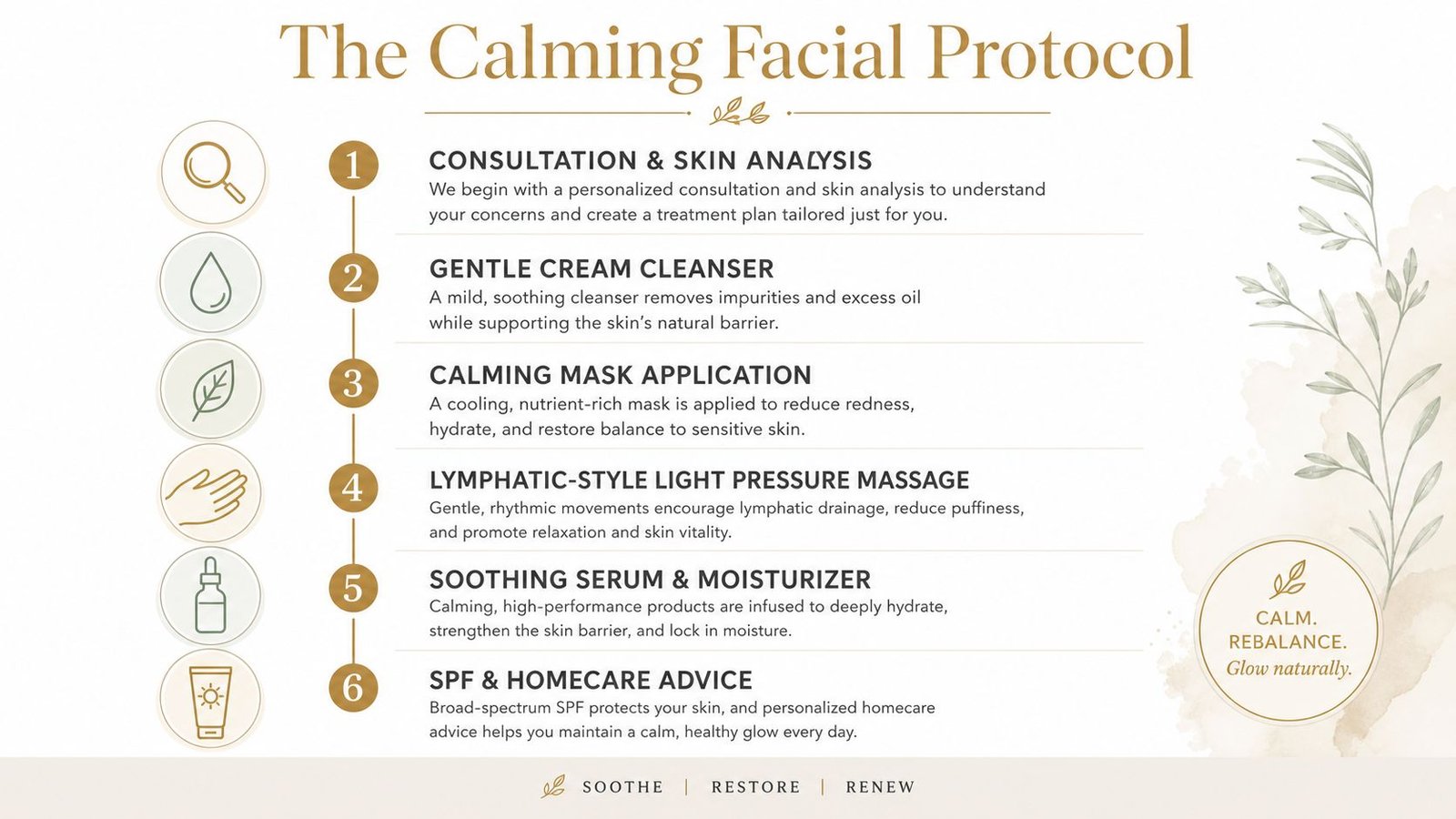
At SI Glam Glow, the right starting point is a consultation-first approach in a private studio, because redness-prone skin needs the protocol adjusted before the first product touches the face. A licensed esthetician can slow the pace, read the skin in the moment, and choose comfort steps that fit what’s happening that day instead of forcing a standard menu onto reactive skin. That difference matters when the goal is to leave calmer, not just treated.
A client with redness-prone skin often arrives with a familiar worry. She might say her skin looked fine in the car, then turned hot in the waiting room, or she may admit she’s been skipping facials because the last one brought on a flare. That hesitation is rational. Redness is not just a color change, it’s a skin behavior that reacts fast to heat, pressure, and ingredients.
A typical facial menu often assumes the skin wants stimulation. That works for some complexions, but redness-prone skin usually needs the opposite. Barrier preservation comes first, because heat, UV exposure, irritants, and abrasive exfoliation can all intensify visible redness and vasodilation, which is why dermatology guidance recommends gentle, fragrance-free cleansing, avoiding hot water, avoiding abrasive exfoliation, and using daily sun protection (AAD guidance on facial redness).
In a private treatment room, that changes the whole tempo. The consultation comes before product selection, and the room temperature, towel use, and massage pressure all get scaled down if the skin looks flushed or feels hot. For clients looking for practical support beyond the treatment room, solutions for tight, stinging skin can help frame what barrier care looks like day to day.
Practical rule: If the face is hot, stinging, or visibly more reactive than usual, the appointment should start as a calming assessment, not as a full-service facial.
A redness-prone client does not need to be pushed through the same cleanse, scrub, steam, and extraction sequence used for oilier skin. She needs a protocol that treats the skin as reactive from the outset. That is what makes the session feel professional instead of generic.
A face that reddens easily is usually reacting to a barrier that is under stress. Heat, friction, harsh actives, and environmental triggers can pass through more easily than they should, and the skin answers with visible flushing because the blood vessels widen. Sometimes the color settles quickly. Sometimes it lingers long after the trigger is gone.
Redness often builds when several triggers stack at once. Temperature extremes, spicy foods, alcohol, caffeine, stress, and harsh skincare actives can all increase the chance of a flush, and reducing those exposures can help lower how often and how intensely it shows up (La Roche-Posay on facial redness triggers). That is why a client can look calm one day and feel inflamed the next. The skin is reacting to overall load, not just one obvious mistake.
In the treatment room, that biology changes the plan. Gentle, fragrance-free cleansing becomes the base of the service, not an add-on. Lukewarm or cooler water makes more sense than hot water, and daily SPF stays part of the routine because UV exposure can aggravate redness too (AAD guidance on facial redness).
Barrier-supportive ingredients are chosen because they help hydrate, soothe, and reinforce the stratum corneum against irritant penetration. Niacinamide, ceramides, panthenol, allantoin, hyaluronic acid, and glycerin fit that role well. The goal is not to flood the skin with strong actives. It is to make the surface feel less exposed and less likely to overreact.
If redness comes with a persistent flush, visible vessels, or a rosacea pattern that keeps returning, a facial should be treated as support, not as a substitute for dermatology care. A calming service can reduce irritation around the edges, but vascular redness usually needs medical evaluation to address the root cause. That is also where LED light therapy can sometimes fit into a comfort-focused plan, as long as the skin tolerates the session and the protocol stays gentle.
Heat and stimulation can turn a manageable flush into a longer flare, so the safest protocol is the one that removes extra stimulation first.
That is also why a redness facial should be judged by what it leaves out, not just by what it includes. Less friction. Less heat. Less pressure. More support.
A calming facial starts with a close read of the redness in front of me. A client may arrive with skin that is pink from recent irritation, flushed from rosacea, or marked by visible vessels that stay present between visits. Each pattern behaves differently in the room, so the service has to respond to the pattern, not just the color.
The best version of this facial is built around comfort. I keep the cleanse gentle so it removes buildup without stripping, use a calming mask to lower the sense of heat, and keep massage pressure light enough to support circulation without creating more stimulation. For sensitive and redness-prone skin, the room should stay cool, steam and hot towels should be skipped, towel friction should be minimal, and massage pressure should stay very light because heat and stimulation can make redness look louder (Mayo Clinic rosacea treatment guidance).
During an active flare, some steps belong on the shelf. Steam can be too intense. Hot towels can be too intense. Aggressive exfoliation can be too intense. Extraction pressure should be minimal, or skipped entirely, if the skin is already inflamed. If the face feels hot or burning, I keep the service in comfort mode and avoid anything that adds more stress.
For clients who want a technology conversation as part of a broader plan, LED light therapy can be considered when the skin is calm enough to tolerate it, but it still has to match the current level of sensitivity. It is a support step, not a fix for a flare on its own.
The product side should stay simple and soothing. Niacinamide, ceramides, panthenol, allantoin, hyaluronic acid, and glycerin all fit that role because they support hydration and barrier function without the sharper feel of resurfacing-focused ingredients. Alcohol, camphor, urea, menthol, and fragrance are common irritants on reactive skin, so they do not belong in a redness-focused facial when the goal is calm skin and fewer complaints later.
At SI Glam Glow, the Rosacea Facial follows this low-stimulation approach when the skin can handle an in-studio service. That said, a facial is not a substitute for dermatology care when redness is vascular, recurrent, or tied to rosacea that keeps coming back. The role of the service is to reduce reactivity, improve comfort, and make the skin easier to manage between appointments, while soothing redness treatments at home and medical guidance do the heavier lifting when the condition calls for it.
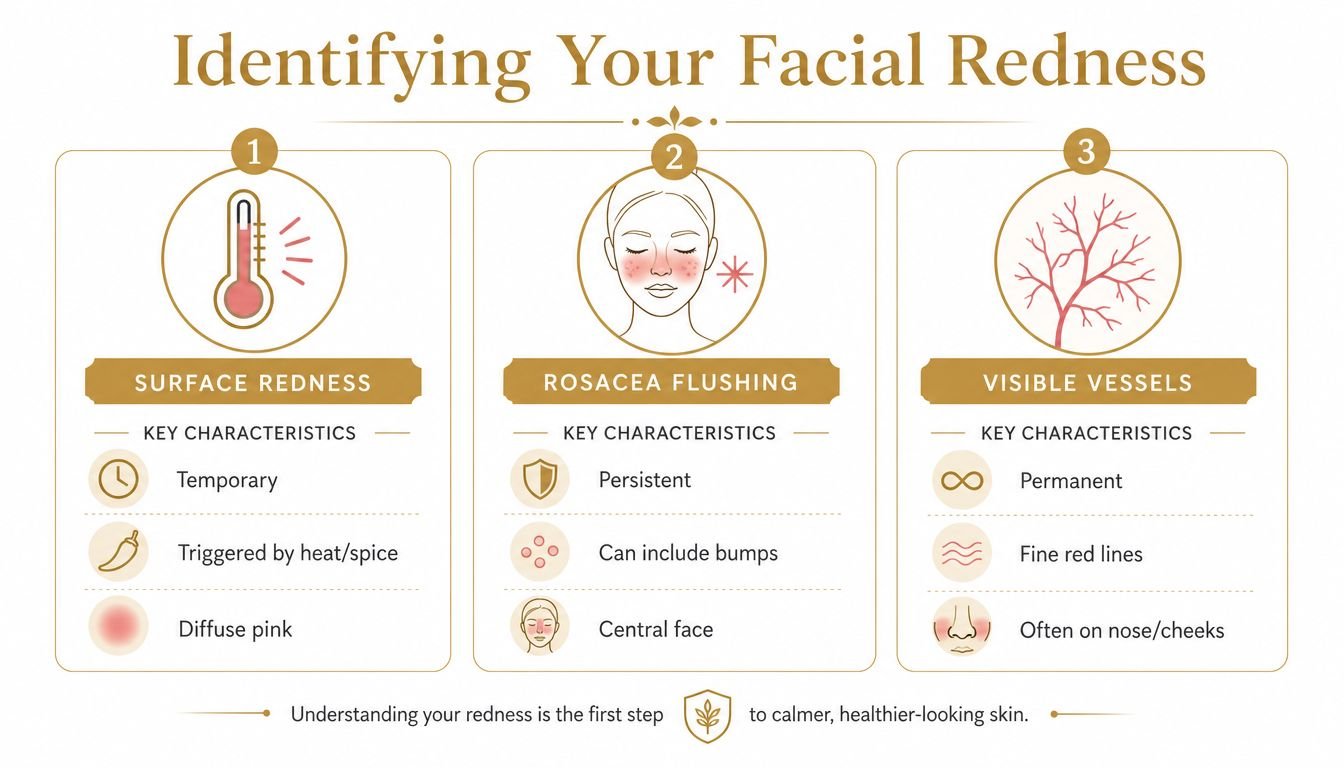
A face that turns pink after spicy food is handled differently from a face that flushes in a repeating pattern, and both are different from skin with fine red vessels that stay visible day after day. That distinction decides whether a soothing facial belongs in the plan, or whether dermatologist care needs to lead.
Surface redness is usually temporary and tied to a clear trigger, like heat, food, alcohol, or a product that did not agree with the skin. Rosacea flushing tends to come back, often across the central face, and it can occur alongside papules and pustules. Visible vessels are more structural, so they usually look persistent instead of coming and going.
A calming facial can support comfort and help the skin look less inflamed, but persistent vascular redness often responds better to dermatologist-level care. Clinical guidance notes that treatment selection should match the phenotype, with brimonidine used to reduce visible erythema and azelaic acid, ivermectin, or metronidazole used when papules and pustules coexist with redness (AAD facial redness guidance). If redness is more significant, light-based treatment may also be part of the plan, and one dermatologist video notes that meaningful control can take about two to three sessions of IPL or Vbeam (expert dermatology video).
If the redness is persistent, burning, or vessel-heavy, the facial is one part of a larger plan. It can help the skin feel calmer in the room, but it will not collapse visible vessels or replace medical treatment when the issue is vascular.
For people comparing options, soothing redness treatments can be a useful educational reference. The practical takeaway stays the same. Surface redness is more likely to benefit from a soothing facial. Persistent rosacea and vascular redness often need dermatologist oversight, and sometimes procedure-based care. A product-forward studio can support that plan, but it should not promise to stand in for it.
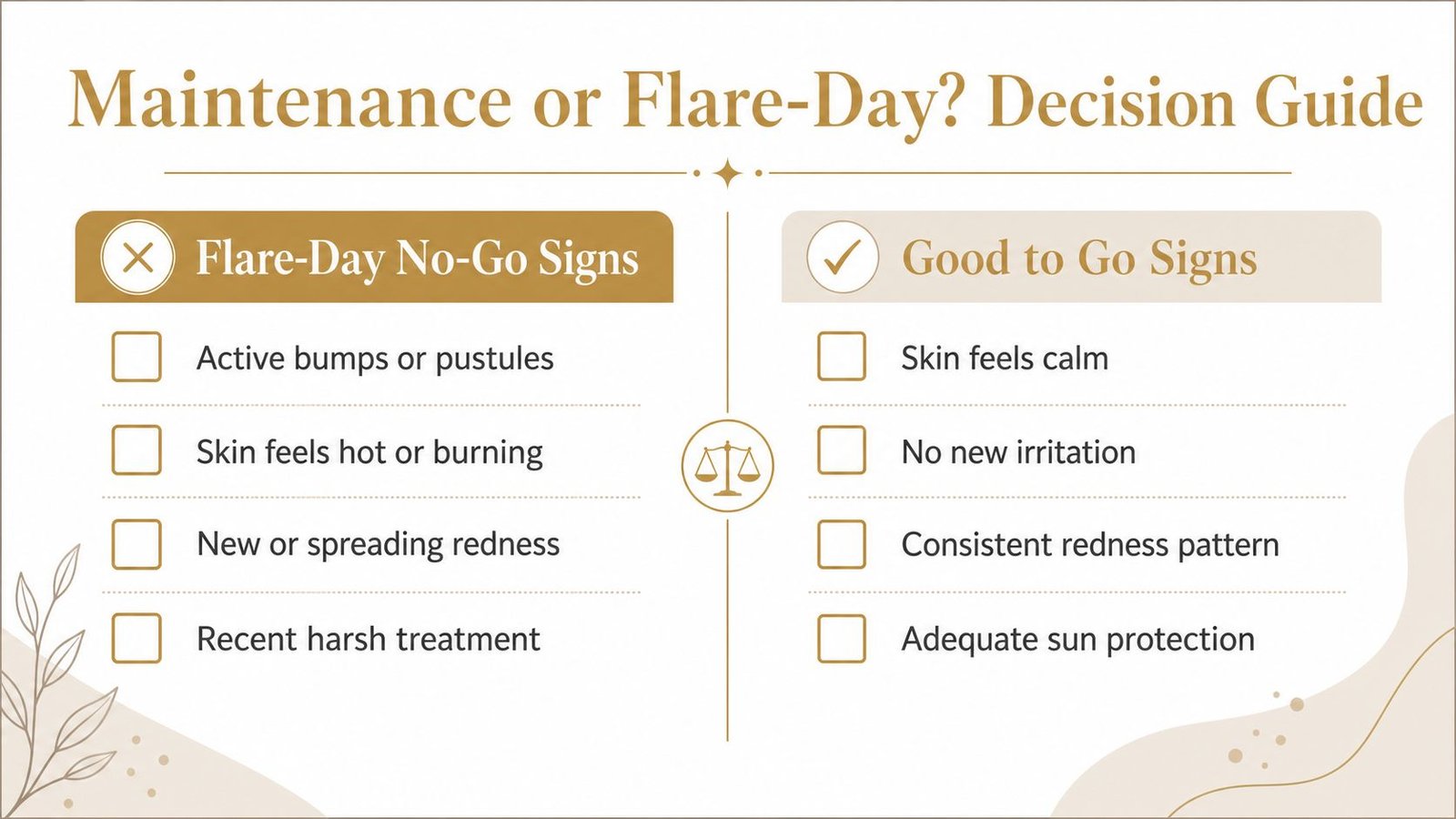
The question most clients really ask is simple. Can I come in today, or should I wait? The answer depends on what the skin is doing right now, not on what it looked like last week.
If the face feels hot, stings when touched, is newly peeling, or looks more inflamed than usual, that is a flare-day situation. A recent harsh treatment also counts, because the skin may already be irritated and less able to handle extra stimulation. Facial redness is often worsened by temperature extremes, spicy foods, alcohol, caffeine, stress, and harsh skincare actives, so reducing those exposures between visits can help lower flare frequency and intensity (La Roche-Posay on facial redness triggers).
A maintenance day looks different. The skin feels calm, the redness follows a familiar pattern, and there’s no new irritation that day. That is when a soothing facial can stay on protocol without needing to back off halfway through. If the skin is borderline, the better move is usually a shortened service with a mask-forward approach and no extra stimulation.
If a client has to ask whether the face is “too hot for a facial,” the safest answer is often to reduce the service intensity before starting.
The booking call should cover current temperature sensitivity, recent products, and any triggers that have been loud lately. That keeps the appointment from turning into damage control once the client is already on the table. It also helps set the right expectation that a redness facial is a maintenance strategy, not a rescue for every flare.
For a broader scheduling framework, the Holistic Facial Treatment page fits well with clients who want a low-stress, whole-picture approach. The logic stays consistent. Maintenance appointments support calmer skin, flare-day appointments should get gentler, and some days are better spent rescheduling than pushing through.
A redness-prone routine should feel boring in the best way. No surprises. No burning. No “let’s see how this goes.” The ingredients worth keeping are the ones that help skin stay comfortable without adding more heat or more reactivity.
Niacinamide can support the barrier and help reduce the look of redness. Ceramides help reinforce the lipid layer, which matters when skin feels stripped or reacts too quickly. Panthenol and allantoin are useful for soothing comfort, while hyaluronic acid and glycerin add hydration without forcing a heavy, occlusive feel.
These ingredients work best when the rest of the routine stays simple. A fragrance-free cleanser, a lightweight moisturizer, and sunscreen are usually enough to keep the skin steady without crowding it with extras. Skin that reddens easily does not need a crowded shelf.
Avoiding common irritants matters just as much. Alcohol-based toners, strong fragrance, menthol, camphor, and harsh exfoliating acids tend to backfire on reactive skin, especially when the barrier already feels strained. Urea can also sting in the wrong formula or strength, so the product itself matters, not just the ingredient name.
A good home routine should make the skin look quieter over time, not feel busy. If a product creates a hot tingle, tightness, or extra flushing, it does not belong in a redness plan. The goal is to support the facial, not undo it by irritating the skin between visits.
A real redness-prone client journey usually starts before the appointment, not during it. She fills out intake notes, explains what she feels after cleansing or heat exposure, and describes when the flushing started. That first conversation gives the esthetician a map, and in a private studio, that map matters because the service can be adjusted without rushing or crowding the room.
A licensed esthetician can then build the plan around the skin’s current tolerance. A calming facial may be the first step, followed by written aftercare that keeps the next 48 hours simple. If the skin is ready later, more advanced modalities can enter the plan gradually, but only when the barrier looks settled enough to handle them. That sequencing is the difference between thoughtful care and over-treatment.
In some cases, a nutrition-informed perspective can also help shape the conversation around triggers, because redness rarely lives in skincare alone. Temperature, stress, food choices, and home products all interact, so the follow-up isn’t just about what happened on the table. It’s about what the client can maintain between visits.
A good plan protects the skin first, then builds from there. If the face can’t tolerate stimulation today, the most skilled move is to simplify.
SI Glam Glow also offers options like Glo2Facial, BioRePeel, microcurrent lifting, and men’s facials, but those belong only when they fit the skin goal and the barrier is ready. For redness-specific work, the schedule should stay centered on comfort, observation, and follow-up. That’s how the client starts to see what her skin can tolerate, what it can’t, and when it’s time to bring in dermatologist care for vascular or persistent redness.
If you’re dealing with flushing, stinging, or redness that keeps coming back, SI Glam Glow can build a facial plan around your skin’s current tolerance instead of forcing you through a generic service. Visit SI Glam Glow to book a consultation, talk through your redness pattern, and choose a treatment approach that respects both comfort and realistic results.
Book a personalized consultation at our Staten Island studio and get a skin plan built around your goals.
Book a Consultation