
Serving clients throughout Staten Island, Brooklyn & New York City
Last Updated: August 14, 2026
Finding the best facial for sensitive skin is harder than it sounds. Most facial menus aren’t built with reactive skin in mind, and the wrong treatment can leave you redder, tighter, and more irritated than when you walked in. At SI Glam Glow, we work with sensitive and redness-prone clients regularly, and the question we hear most often is simple: “Which facial won’t make my skin angry?”
This guide answers that directly. You’ll find treatment options that work well for reactive skin, ingredients to look for, how to prepare before your appointment, and how to care for your skin after. Whether you’re dealing with rosacea, general reactivity, or a compromised skin barrier, the right facial can support your skin rather than set it back.
Quick Picks:
Sensitive skin reacts more easily than average to environmental factors, skincare products, or physical touch, often presenting as redness, stinging, tightness, or flushing. The underlying cause is usually a weakened stratum corneum, the outermost layer of skin, which allows irritants to penetrate more easily and triggers heightened inflammation.
This matters for facial treatments because most standard protocols involve exfoliation, extraction, or active ingredients that healthy skin tolerates well. For reactive skin, those same steps can overwhelm the skin’s defenses and worsen barrier integrity. A good sensitive-skin facial works with the skin’s natural protective systems rather than against them.
Knowing your triggers helps you choose a treatment that won’t backfire:
Skin sensitivity isn’t static. Many people find their skin significantly more reactive in winter, when cold air and indoor heating accelerate transepidermal water loss. Adjust your facial protocol seasonally. Barrier-repair and hydration-focused treatments tend to be most beneficial in colder months, while calming and anti-inflammatory options like LED therapy work well year-round. Mention seasonal patterns during your consultation so your treatment plan reflects them.
The best facial for sensitive skin prioritizes calming, hydrating, and barrier-supporting steps over aggressive exfoliation or deep extraction.
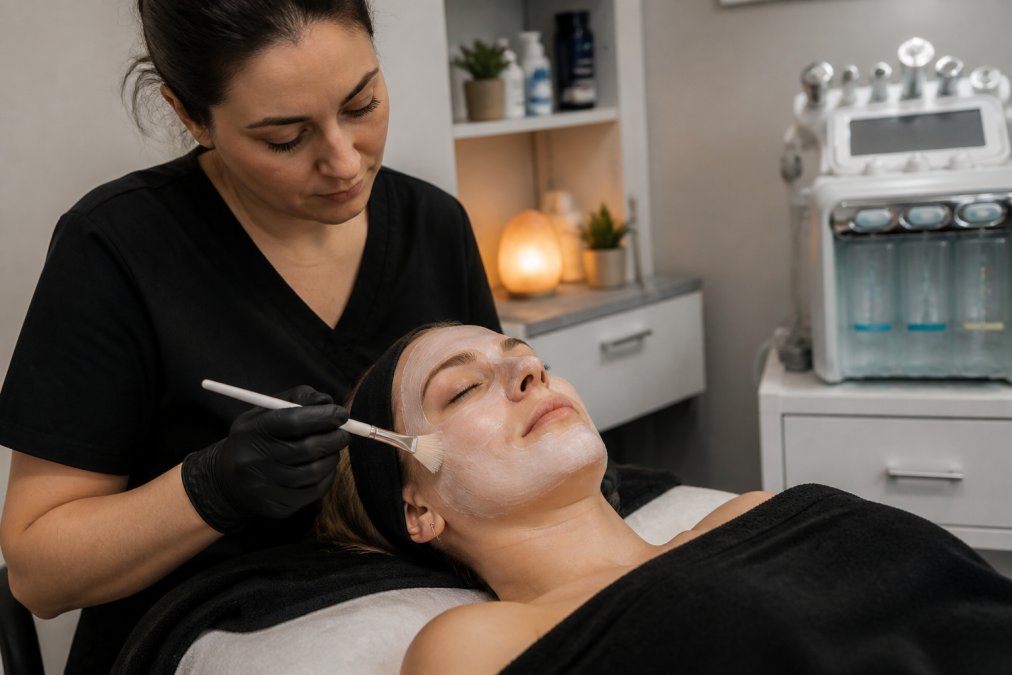
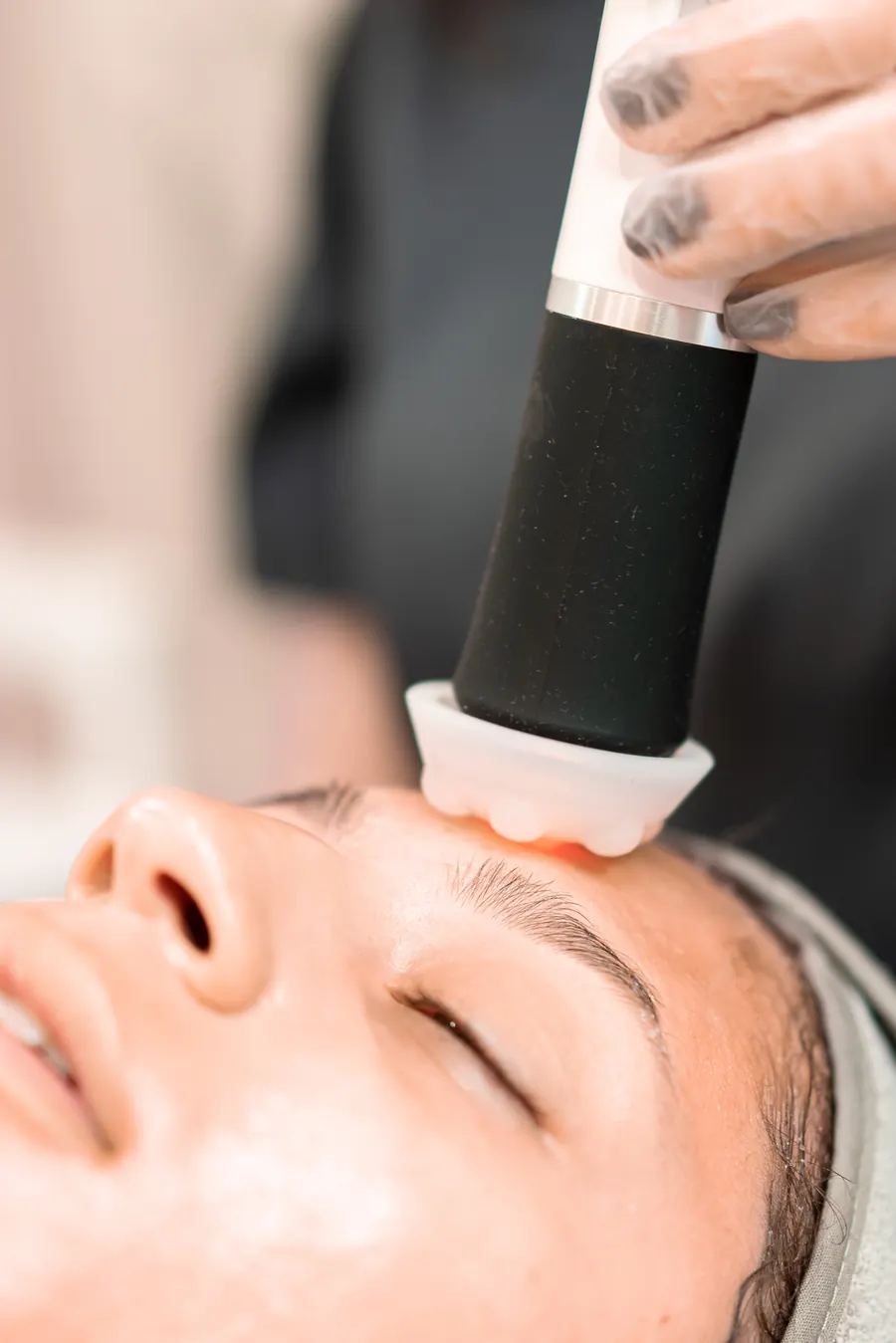
The HydroDerm Facial combines cleansing, gentle exfoliation, and deep hydration without relying on harsh chemicals or abrasive scrubbing. The technology simultaneously exfoliates and infuses skin with nourishing serums, including hyaluronic acid, antioxidants, and peptides. What makes it suitable for reactive skin is the adjustability, suction levels and serum selection can both be modified to suit your skin’s tolerance. Most clients describe the sensation as a gentle massage rather than anything uncomfortable.
Best for: Clients who want visible improvement in hydration, texture, and clarity without downtime or irritation risk.
LED light therapy is one of the few facial treatments that is almost universally gentle enough for reactive and rosacea-prone skin. Red LED wavelengths are anti-inflammatory by nature, supporting collagen production and reducing redness without physical contact or chemical exposure. Blue LED targets bacteria associated with acne without irritating surrounding skin.
According to the American Academy of Dermatology’s overview of light therapy for skin, low-level light therapy has been studied for its calming and healing effects on the skin.
Best for: Clients with rosacea, chronic redness, or post-procedure sensitivity who need a treatment with essentially zero irritation risk.
Enzyme exfoliation uses natural fruit-based enzymes, most commonly papaya and pumpkin, to dissolve dead skin cells without the acidity of traditional chemical peels. Because enzymes work biologically rather than altering the skin’s pH, they’re much gentler on reactive skin while still improving texture and radiance. This is a strong alternative for clients who want brightening effects but have reacted poorly to AHAs or BHAs.
Best for: Clients with dull, uneven texture and sensitivity who have previously reacted to acid-based exfoliants.
A hydration-focused facial centers on replenishing moisture and supporting the skin’s natural barrier rather than treating a specific concern aggressively. These treatments typically involve a gentle cleanse, light steam, calming mask, and nourishing moisturizer rich in hyaluronic acid and soothing agents like aloe vera and green tea extract.
The European Facial at SI Glam Glow follows this philosophy, with each step tailored to your skin condition on the day of the appointment. For sensitive skin, that often means skipping steam or reducing extraction to only what the skin can comfortably tolerate.
Best for: Clients new to facials, those recovering from skin stress or over-exfoliation, or anyone needing barrier repair.
Chemical peels and sensitive skin sound like an obvious mismatch, but a carefully chosen peel at the right concentration can be appropriate for reactive skin types. Mandelic acid is often the first choice for sensitive and rosacea-prone clients because its larger molecular size means it penetrates more slowly, reducing irritation risk. Lactic acid at lower concentrations is another well-tolerated option that exfoliates while providing hydration.
Best for: Clients with hyperpigmentation, uneven tone, or sun damage who want brightening but have found stronger peels too harsh.
Knowing which ingredients support sensitive skin and which ones cause problems is useful for understanding professional treatments and choosing products to use at home afterward.
According to the National Eczema Association’s ingredient guidance, colloidal oatmeal has strong evidence for calming skin reactivity and supporting barrier function.
Good preparation can make a meaningful difference in how your skin responds to a professional treatment.
One week before:
Two to three days before:
Day of your appointment:
Patch testing involves applying a small amount of a product or treatment ingredient to a discreet area of skin, typically behind the ear or on the inner forearm, and waiting 24 to 48 hours to observe any reaction before proceeding with a full treatment. For sensitive skin clients, a responsible esthetician will either recommend or perform a patch test before using any new product or active ingredient on the face.
Before your appointment, mention if you are currently using:
As noted by the American Academy of Dermatology’s guidance on skincare and medications, medication interactions with skincare treatments are a genuine clinical consideration. Your esthetician needs this information to keep your treatment safe.
The 24 to 48 hours after a facial are when your skin is most vulnerable. How you care for it during this window significantly affects your results.
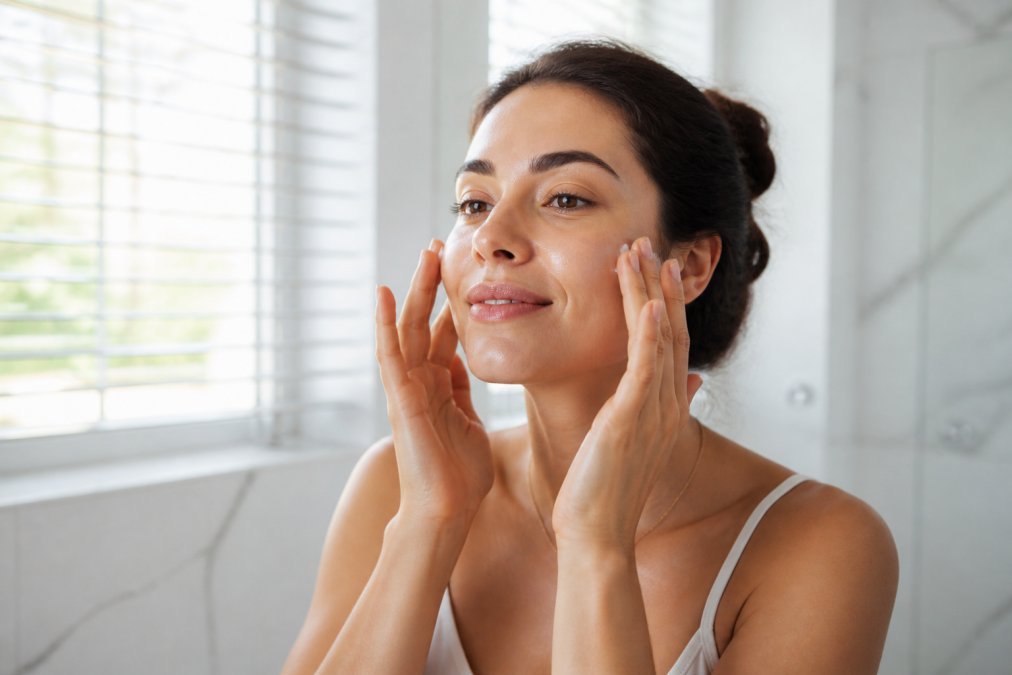
The core principle of post-facial aftercare for sensitive skin is simplicity. Your skin has just been worked on and needs time to settle.
What to do:
What to avoid:
The best facial for sensitive skin depends on what you’re trying to address. There’s no single treatment that works for every reactive skin type.
|
Treatment |
Best For |
Key Benefit |
Downtime |
|---|---|---|---|
|
HydroDerm Facial |
Hydration and gentle cleansing |
Deep moisture, no irritation |
None |
|
Redness, rosacea, inflammation |
Anti-inflammatory, calming |
None |
|
|
Enzyme Exfoliation |
Dull texture, sensitivity to acids |
Gentle brightening |
Minimal |
|
Hydration-Focused Facial |
Barrier repair, first-time clients |
Nourishment, comfort |
None |
|
Gentle Chemical Peel |
Hyperpigmentation, uneven tone |
Brightening, texture improvement |
2-5 days mild flaking |
A few guiding principles:
For clients who are unsure where to start, a personalized skin consultation before booking a treatment is always worthwhile. A licensed esthetician can assess your skin’s current condition, ask about your history and concerns, and recommend a treatment path that makes sense for you specifically.
According to the Skin Cancer Foundation’s guidance on professional skincare treatments, working with a licensed skincare professional who tailors treatments to your individual skin condition is an important part of maintaining skin health over time.
If you’d like to discuss which facial might work best for your skin, we’d be happy to talk through your concerns and help you find the right approach.
Hydration-focused facials, LED light therapy, and enzyme exfoliation treatments are generally the most comfortable options for very sensitive skin. They work without harsh chemicals or aggressive physical exfoliation, so the risk of triggering redness or irritation is lower. A licensed esthetician can assess your skin's reactivity level and recommend the treatment that fits your specific concerns, whether that's rosacea, barrier damage, or general sensitivity.
A HydraFacial for sensitive skin can be a good fit because the suction level and serums are adjustable. The treatment cleanses, exfoliates gently, and infuses hyaluronic acid and antioxidants without harsh scrubbing or strong acids. Most people with reactive skin tolerate it well, though it's still worth telling your esthetician about any known triggers or active skin conditions before the session so the protocol can be tailored accordingly.
Fragrance, alcohol, high-concentration AHAs, benzoyl peroxide, and synthetic dyes are among the most common irritants for reactive skin. Strong retinoids and physical scrubs with sharp particles can also disrupt the stratum corneum and increase transepidermal water loss. When reviewing any treatment or product, look for fragrance-free, non-comedogenic, and hypoallergenic formulations. Always let your esthetician know which ingredients your skin has reacted to in the past.
For most people with sensitive or reactive skin, a professional facial every four to six weeks is a reasonable starting point. This gives the skin time to recover and maintain barrier integrity between sessions. Your esthetician may suggest a different cadence depending on your skin's condition, the type of treatment, and how your skin responds after each visit. Results vary, and consistency over time tends to produce the most noticeable improvement.
Some mild redness or warmth immediately after a sensitive skin facial is normal and usually fades within a few hours. Signs that may indicate a more significant reaction include persistent redness lasting more than 24 hours, swelling, itching, burning, breakouts that appear within 48 hours, or skin that feels tight and uncomfortable. If any of these occur, avoid active skincare products, keep the skin hydrated, and contact your esthetician to discuss next steps.
Book a personalized consultation at our Staten Island studio and get a skin plan built around your goals.
Book a Consultation