Serving clients throughout Staten Island, Brooklyn & New York City
Last Updated: September 5, 2026
When a teenager’s skin doesn’t respond to drugstore cleansers or spot treatments, parents often wonder what comes next. Professional acne treatments for teens offer a path forward, combining expert guidance with treatments tailored to young, sensitive skin. At SI Glam Glow, we work with Staten Island teens and their families to address breakouts with a gentle, personalized approach.
Most teens start with products from the pharmacy aisle, and many see limited results. Over-the-counter treatments typically use single active ingredients at lower strengths, which may not address the combination of excess oil, clogged pores, and bacteria that fuel breakouts.
Another common issue is inconsistency. Teens may try a product for a week, see no change, and switch to something else. Skin needs time to respond, and jumping between products can irritate the skin barrier.
Many drugstore routines also lack the professional insight needed to match products to a specific skin type. What works for one teen’s oily skin may be far too drying for another’s sensitive complexion.
Professional acne treatments for teens are in-office procedures performed by a licensed esthetician, designed to deep-cleanse pores, calm inflammation, and support healthier skin over time. They combine professional-grade techniques, customized product selection, and a trained eye that adjusts the session to your teen’s skin that day.
A typical session focuses on gentle extraction of clogged pores, soothing masks, and treatments that support cell turnover without stripping the skin.
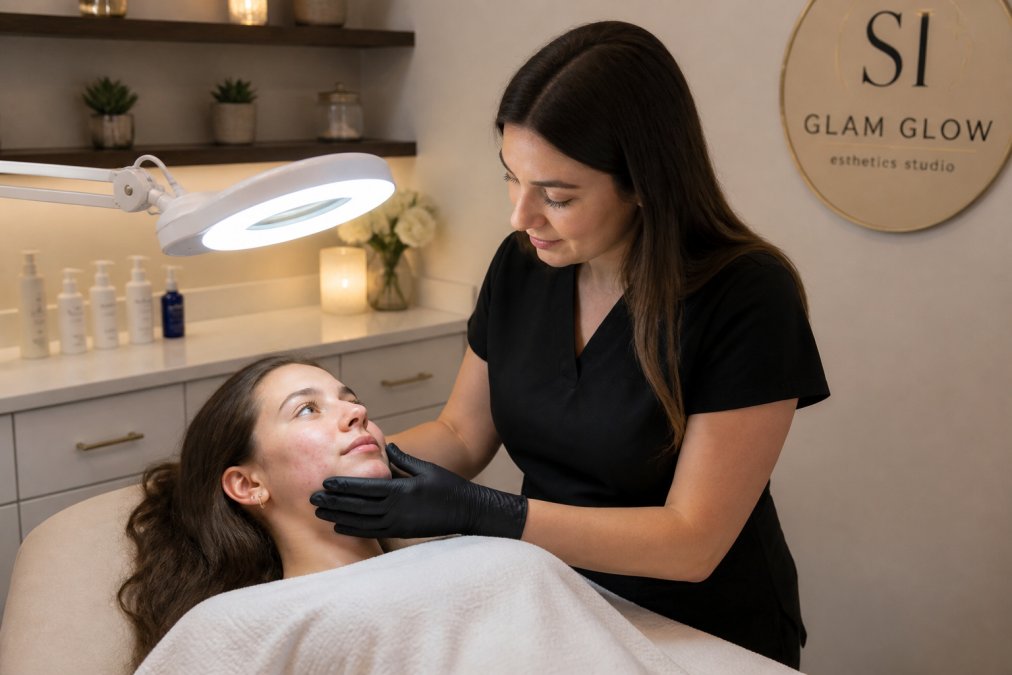
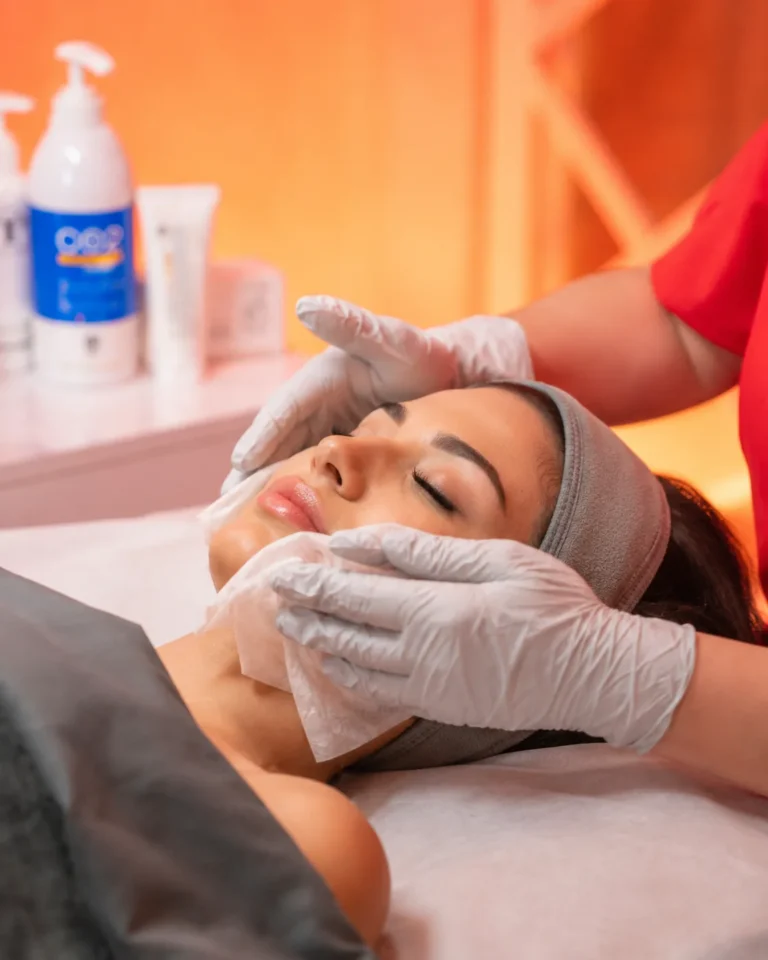
A teen facial is a customized facial designed specifically for young, acne-prone skin. The focus is on gentle cleansing, steam, extractions when appropriate, and calming ingredients that help reduce the appearance of redness and inflammation.
Teen facial benefits go beyond the treatment table. These sessions also serve as an educational moment, where teens learn what their skin type is and which products actually support it.
A solid skincare routine for teenagers supports any professional treatment and helps extend results between visits. Consistency matters more than the number of products used, and a simple routine is often enough.
A gentle cleanser used morning and night is the first step. For acne-prone teen skin, look for a foaming or gel cleanser with salicylic acid at 0.5% to 2%. Salicylic acid is oil-soluble, so it can penetrate the pore and help dissolve the buildup of dead skin cells and oil that leads to blackheads and whiteheads.
If breakouts are more inflamed, red, tender, or pus-filled, a cleanser with benzoyl peroxide at 2.5% to 5% may be more appropriate. Benzoyl peroxide introduces oxygen into the pore, which helps reduce the bacteria that contribute to inflammatory acne. Note that it can bleach fabrics, so white towels and pillowcases are a practical choice during use.
For teens with sensitive skin, a plain, fragrance-free cleanser without active ingredients may be the better starting point. The goal is to cleanse without leaving the skin feeling tight, dry, or stripped.
Many teens skip moisturizer because they worry it will make their skin oilier. In reality, when the skin is stripped of moisture, it can compensate by producing more oil. An oil-free, non-comedogenic moisturizer maintains the skin barrier while providing lightweight hydration.
Gel-based moisturizers with hyaluronic acid or glycerin are often well-tolerated by young, oily skin. During winter, or if the skin feels dry from acne medications, a slightly richer but still oil-free cream may be needed.
Sunscreen is the most overlooked step in a teen’s routine, yet it’s essential. Many acne treatments, including salicylic acid, benzoyl peroxide, and prescription retinoids, can increase the skin’s sensitivity to the sun. Daily application of a broad-spectrum SPF 30 or higher helps prevent the dark marks that can linger after a breakout heals.
Look for sunscreens labeled oil-free and non-comedogenic. Gel-based or fluid formulas feel lighter on young skin and are more likely to be worn consistently. If your teen plays sports, a sweat-resistant formula is worth considering.
One of the most common mistakes teens make is starting multiple strong products at once. This often leads to irritation. A better approach is to introduce one active ingredient at a time, using it every other day at first, then gradually increasing frequency as the skin builds tolerance.
A common pattern is a salicylic acid cleanser in the morning and a benzoyl peroxide spot treatment at night, applied only to active breakouts. If the skin becomes red, peeling, or uncomfortable, that’s a sign to cut back.
Many teens (and parents) assume that acne treatment needs to be aggressive to work. But maintaining the skin barrier is just as important as clearing breakouts. The skin barrier is the outermost layer that locks in moisture and keeps irritants out. When it’s compromised, the skin becomes more sensitive and reactive.
Signs of a damaged skin barrier include persistent dryness, stinging when applying products, and breakouts that seem to appear no matter what you do. If this sounds familiar, simplify the routine to just a gentle cleanser, moisturizer, and sunscreen for a week or two before reintroducing active ingredients.
A routine only works if it fits into a teenager’s actual schedule. A five-step morning routine is unrealistic before a 7:00 AM school bus. Keep it simple: cleanse, moisturize, and apply sunscreen in the morning; cleanse and moisturize again at night.
Consistency over perfection is the goal. A simple routine followed daily will almost always outperform a complex routine followed sporadically.
Preparation for a teen facial is straightforward, and a little planning helps the skin respond well. Here’s what we recommend before the appointment:
If your teen is new to professional care, it’s okay to feel a little nervous. A good esthetician will explain each step and check in on comfort throughout the session.
What happens after the facial is just as important as the treatment itself. Acne facial aftercare tips focus on protecting the skin while it settles and supporting the results.
A professional facial for acne involves extractions, exfoliation, and active ingredients that clear congestion. These techniques are effective, but they also temporarily increase the skin’s sensitivity. The skin barrier needs time to recover.
Think of the skin barrier as a brick wall. The skin cells are the bricks, and the lipids between them are the mortar. When the mortar is stripped away, the wall becomes leaky. Aftercare is about rebuilding that mortar so the skin can heal properly.
For the first day or two after a facial, the skin may look slightly flushed or feel a bit sensitive. This is normal and typically fades quickly. During this window, the routine should be minimal:
After the first 48 hours, the skin may still be settling. This is the time to focus on barrier-supporting ingredients rather than jumping back into aggressive acne treatments.
A common mistake is assuming that if a little active ingredient is good, more is better. After a facial, the skin has already received a concentrated dose of professional-grade treatment. Piling on additional exfoliants at home can overwhelm the skin.
A purging phase can happen after a facial, especially when extractions have brought underlying congestion to the surface. Small whiteheads or bumps may appear in the days following treatment. This is not a sign that the facial failed, it’s the skin working through congestion that was already there.
A breakout may appear in new areas and is often triggered by external factors like a new product or a change in routine.
Freshly treated skin is more vulnerable to UV damage. Sun exposure after a facial can increase the risk of post-inflammatory hyperpigmentation. Apply a broad-spectrum SPF 30 or higher every morning, even if it’s cloudy.
Acne is a chronic condition, not a one-time event. A single facial can improve the look of active breakouts, but a series of treatments spaced two to four weeks apart often produces more noticeable, longer-lasting results.
Between visits, consistent home care carries the results forward. The facial does the deep work; the daily routine maintains it.
Professional facials and dermatological care are not competing options; they often work best together. Acne treatments for teens may include a dermatologist when breakouts are severe, painful, cystic, or leaving scars. A dermatologist can prescribe stronger treatments that an esthetician cannot provide.
The collaboration is simple. A dermatologist manages the medical side of acne, while a licensed esthetician supports the skin’s health and appearance between appointments. If a teen’s acne is not improving with over-the-counter care or professional facials, a referral to a dermatologist is a reasonable next step. Estheticians are trained to recognize when a client’s needs fall outside their scope and should communicate openly with any medical provider involved.
Teen acne is more than a cosmetic concern. For many young people, it affects confidence, social interactions, and mood. A breakout before a school dance or a big presentation can feel overwhelming.
Teens need to hear that acne is common, that it is not their fault, and that it does not define their worth. Parents can help by focusing on progress rather than perfection and praising healthy habits instead of criticizing breakouts.
Clearer skin often brings a confidence boost, but so does the experience of being listened to and cared for without judgment. A welcoming environment, where a teen feels comfortable asking questions, makes a meaningful difference.
Choosing where to seek acne treatments for teens in Staten Island comes down to finding a provider who combines skill with genuine care. The right esthetician takes time to understand the teen’s skin, listens to their concerns, and builds a plan that feels realistic for their lifestyle.
At SI Glam Glow, we offer personalized teen and anti-acne facials in a private, one-on-one setting. Every session begins with a conversation about the client’s skin history, concerns, and goals, so the treatment is tailored rather than routine. We work gently, explain what we’re doing and why, and focus on realistic, gradual results that respect young skin’s needs.
If you’re exploring professional acne treatments for teens and want a supportive, knowledgeable team in Staten Island, we’re here to help. Reach out to SI Glam Glow to learn more about our teen facial options and how we can support your teen’s skin.
There is no single best answer, as effective acne treatments for teens depend on the type and severity of breakouts. Many teens see good results with a consistent routine using benzoyl peroxide or salicylic acid combined with regular professional teen facials. For persistent or severe acne, a dermatologist may recommend prescription retinoids like adapalene or oral medications. A licensed esthetician or dermatologist can help tailor a plan that addresses your teen’s specific skin concerns.
For active breakouts, a professional facial every three to four weeks is often recommended. This aligns with your skin’s natural cell turnover cycle, allowing the esthetician to manage congestion and monitor progress. After the skin improves, many teens switch to a maintenance schedule of every six to eight weeks. Your esthetician will suggest a frequency based on how your skin responds, so results vary from person to person.
Yes, when performed by a licensed esthetician who customizes the treatment. A professional will assess your teen’s skin sensitivity and adjust products and techniques accordingly. They may avoid harsh physical exfoliation and instead use gentle enzymatic or chemical exfoliants like salicylic acid or azelaic acid. The goal is to reduce inflammation and clear pores without damaging the skin barrier. Always share your teen’s full skincare history and any prescriptions they use before a facial.
A first teen facial usually starts with a skin consultation and analysis. The esthetician then cleanses the skin and may perform extractions to remove clogged pores. This can feel like slight pressure, but it should not be unbearable. Depending on your teen’s skin, the esthetician might apply a calming mask or targeted serum. The entire session is tailored to be comfortable and educational, ending with recommendations for a home care routine.
Book a personalized consultation at our Staten Island studio and get a skin plan built around your goals.
Book a Consultation