Almost every studio advertises a customized facial. Very few explain what is actually being customized, who decides, or how you would know whether it happened at all.
This page explains exactly that: the specific decisions an esthetician makes about your skin, what they are looking at when they make them, and what to tell them so the result is genuinely built around you rather than around a menu.
And if you do not know which facial you need — which is how most people arrive — that is exactly what a consultation is for. Your esthetician assesses your skin and tells you which treatment suits it, before you commit to anything.
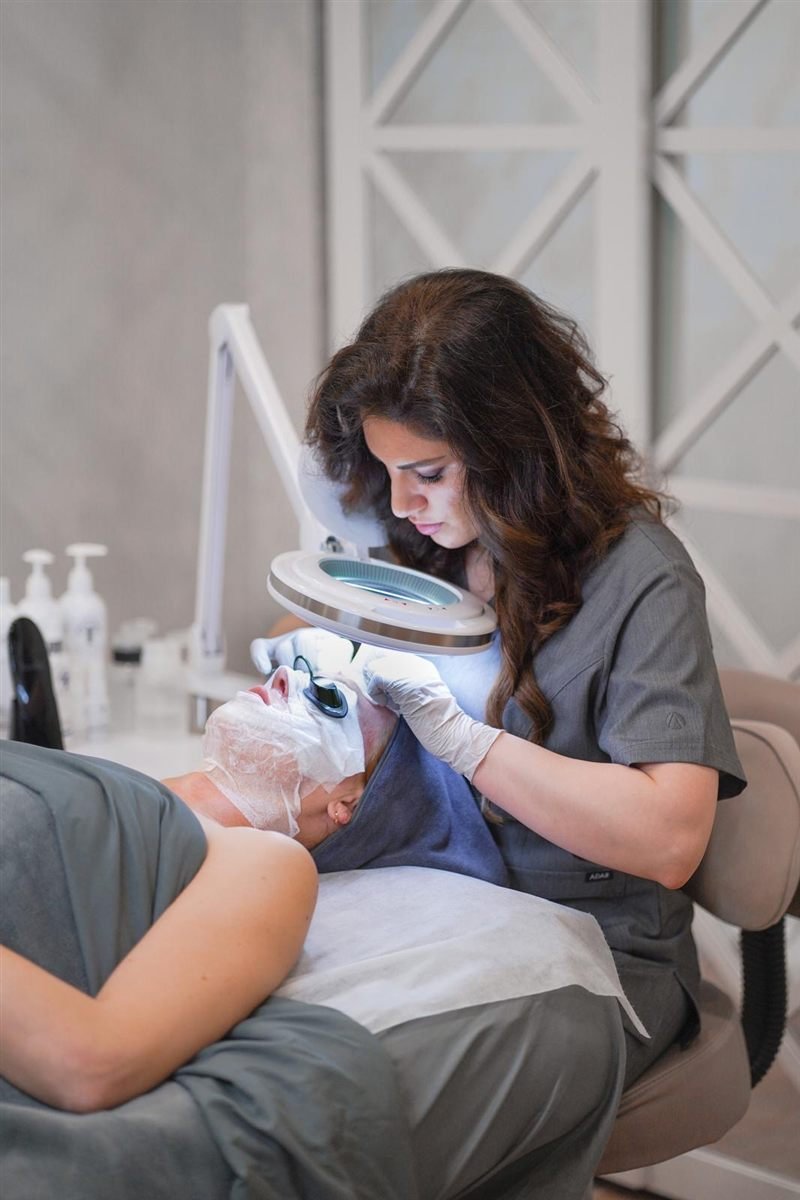
A customized facial is not a treatment on a menu. It is a method: the esthetician assesses your skin on the day, then selects and adjusts each step of the treatment to match what they found, rather than performing a fixed sequence identically on everyone who books it.
That distinction is easy to say and harder to verify, which is why the word appears on nearly every spa website. The honest test is simple. In a genuinely personalized facial, someone looked at your skin before deciding what to do to it, and could tell you afterward what they changed and why.
If the treatment would have been identical regardless of who was on the bed, it was a standard facial with a customized label. Both can be pleasant. Only one is likely to address what your skin is actually doing.
Customized Facial
also called a custom or personalized facial
These are the real variables. When someone says a facial is tailored to you, these are the dials they are turning — and any of them can be turned the wrong way for your skin.
Oil, cream, gel, or foaming. A foaming cleanser that suits congested oily skin can leave a dry or barrier-compromised complexion feeling tight and worse than when it arrived.
Physical, enzymatic, or acid-based — and whether any is appropriate at all today. This is the single decision most likely to cause a problem when it is made by habit rather than by assessment.
The same acid at the same percentage behaves very differently left on for two minutes versus six. Duration is adjusted to how the skin is actually responding while it is on.
Whether to steam, for how long, and whether to extract at all. Extractions on inflamed or reactive skin can do more harm than leaving congestion in place for another few weeks.
Clay, hydrating, calming, or brightening — sometimes more than one applied to different zones of the same face, because most faces are not uniform across the cheeks, nose, and jaw.
Which serums go on, in what order, and which are deliberately left off. Layering actives that conflict is a common way for a pleasant facial to produce irritation two days later.
Pressure, direction, and duration. Lymphatic work suits puffiness; vigorous massage on rosacea-prone or reactive skin is usually the wrong call regardless of how good it feels.
Whether LED, microcurrent, oxygen, or dermaplaning belongs in the session at all, and whether combining two of them is genuinely better for you or simply a larger invoice.
The most underrated part. A properly personalized facial frequently involves doing less than the menu describes, because your skin on that particular day did not need all of it.
Customization is only as good as the assessment behind it. Here is what is actually being read in those first few minutes, and what only you can supply.
Standard facials are not bad. They are predictable, and predictability has real advantages. The difference is worth understanding rather than being sold.
The word customized is unregulated, so it is worth being sceptical of it — including here. The verifiable version is whether anyone assessed your skin before choosing what to use on it, and whether they can tell you afterward what they chose and why. Ask. A studio doing this properly will enjoy the question.
This is the strongest practical argument for personalization, and the one most people have experienced without recognising it: the facial that was perfect in July can be the wrong facial in January.
Indoor heating in a Staten Island winter is drying in a way summer humidity is not. Barrier support that would feel heavy in August is often exactly right in February.
Oil production and reactivity shift across the month and across life stages. The same treatment can land differently depending purely on when it is booked.
Starting a retinoid, an acid, or a new prescription changes what is safe in the room. Skin mid-adjustment needs less intervention, not more.
Both show up in the skin as reactivity and slower recovery. An esthetician can often see a difficult month before you mention it.
A week away changes pigmentation and barrier condition enough that the exfoliation you had last time may be the wrong call this time.
If earlier treatments worked, your skin has changed. Continuing to treat it as though it has not is one of the more common reasons results plateau.
Customization is a two-way process. These five things make more difference to your result than the treatment you pick off the list.
Often the reverse. Personalizing a facial regularly means removing steps rather than adding them — skipping exfoliation on a compromised barrier, leaving congestion alone when the skin is inflamed, or using one active instead of four. A shorter ingredient list chosen deliberately will outperform a longer one chosen by default.
You do not. Working that out is part of what the appointment is for, and self-diagnosis is frequently wrong — dehydrated skin is very often mistaken for oily skin, which leads people to strip it further. Arriving without a label is genuinely fine.
It will not, and should not try. Pursuing congestion, pigmentation, sensitivity, and fine lines in one session usually means doing each of them badly. Personalization includes deciding what to leave for another visit — and being told that plainly is a good sign, not a poor one.
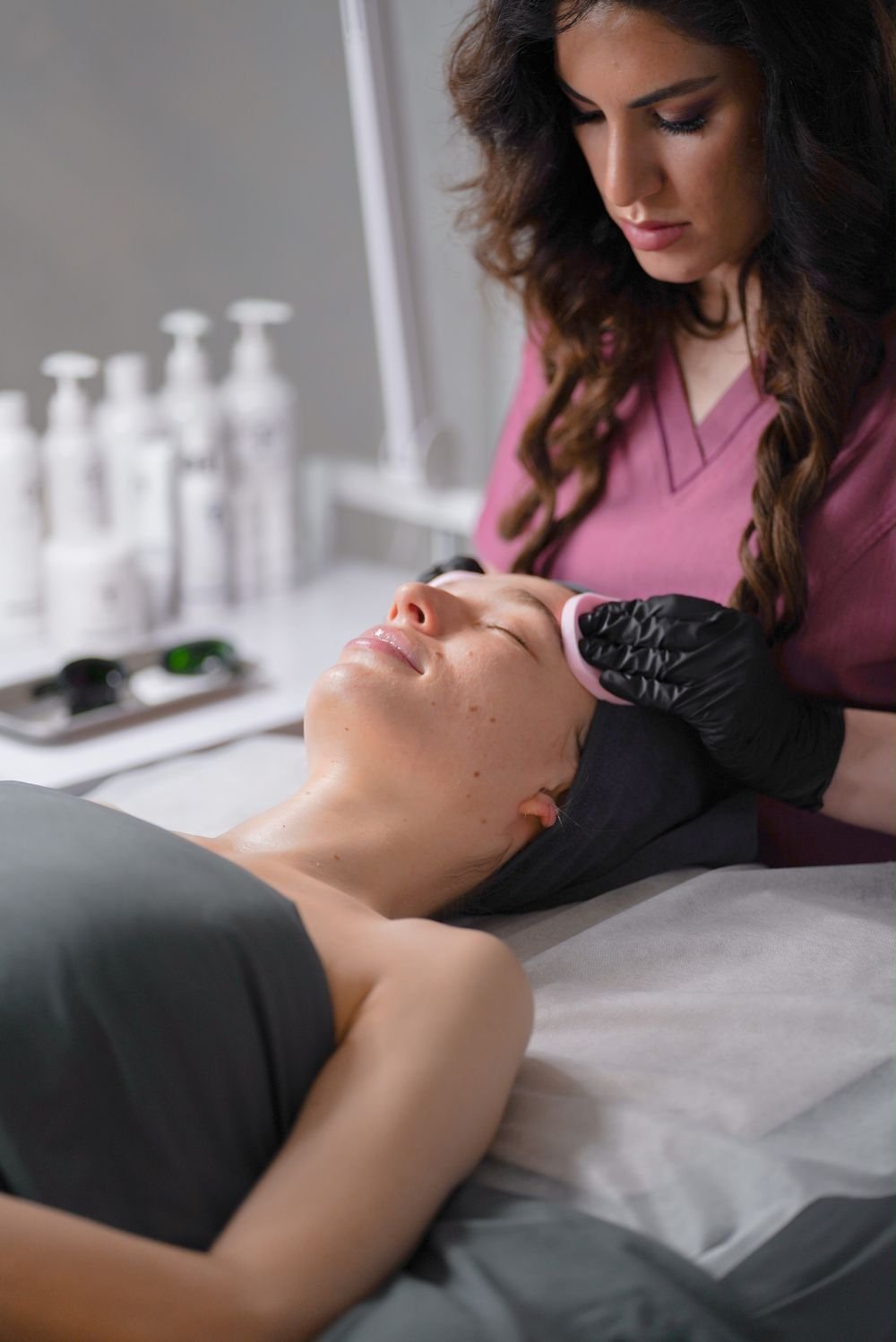
SI Glam Glow is a private, single-room studio in Staten Island. One client is in the room at a time, which is the practical reason customization is possible at all — there is no second bed waiting and no fixed turnaround forcing a standard protocol.
Every appointment begins with your skin being assessed under proper lighting, and the treatment is selected and adjusted from there. If what you booked is not the right call on the day, you will be told so before anything starts, along with what would suit you better.
You do not need to arrive knowing which treatment you want. Most people do not, and picking from a list of sixteen without knowing what your skin is actually doing is guesswork. A consultation removes the guessing: your esthetician looks at your skin, explains what they find, and recommends the treatment that fits it. You book from there.
Not sure which facial you need? Book a consultation and let your esthetician make that call with your skin in front of them. If you would rather browse first, every treatment and its pricing is on the services page.
Book A ConsultationOur Staten Island studio welcomes clients from across the borough, Brooklyn, and New York City seeking personalized facials tailored to their skin.
Questions about individual treatments, what each includes, and pricing are answered on the services page and on each treatment's own page.
It should mean that the products, strengths, and steps were chosen after someone assessed your skin, rather than following a fixed sequence performed identically on everyone. The word is unregulated, so it is worth verifying rather than assuming. The practical test is whether anyone looked at your skin before deciding what to use on it, and whether they can tell you afterward what they chose and what they deliberately left out.
A consultation. That is precisely what it is for, and arriving without knowing is the normal starting point rather than a gap in your knowledge. Choosing from a list of sixteen treatments without knowing what your skin is currently doing is guesswork, and the wrong choice is usually not harmful but often simply unhelpful. In a consultation your esthetician assesses your skin, explains what they find, and recommends the treatment that fits it, so the decision is made with your skin in front of someone.
Generally no, and that is a common source of confusion. Customization is a method of delivering a facial rather than a product on a menu. At SI Glam Glow it applies across every treatment we offer, which is why there is no separate line item called a customized facial. You book the treatment that suits your concern, and it is then adapted to your skin on the day.
No. Determining that is part of what the appointment is for. Self-assessment is frequently inaccurate, and one mistake is especially common: dehydrated skin is often read as oily skin, which leads people to strip it further and make the problem worse. Arriving without a label is completely fine and often more useful than arriving with the wrong one.
The main variables are cleanser type, exfoliation method and strength, how long products stay on the skin, whether to steam and extract at all, mask selection including using different masks on different areas of one face, which active serums are applied and in what order, massage pressure and technique, and whether any device or add-on belongs in the session. Just as important is what gets deliberately left out.
Because your skin is different. Season and indoor heating, hormonal cycles, sun exposure, stress and sleep, and any new active ingredient or prescription you have started all change what your skin needs. Progress itself changes it too: if earlier treatments worked, continuing to treat your skin as though nothing has improved is a common reason results plateau.
Not automatically. A standard protocol is predictable, and predictability has genuine value if your skin is stable and resilient. Customization matters most when skin is reactive, changeable, or you have a specific concern to address, because a fixed protocol cannot adapt when your skin has changed since you booked. It is also only as good as the judgement of the person making the decisions.
Five things carry the most weight: the routine you actually use rather than the ideal one, anything that has previously stung, flushed, or broken you out, any medication or recent treatment such as a peel, laser, waxing, or injectables, the single concern that bothers you most, and any event coming up in the next couple of weeks. Photographing the products on your shelf takes seconds and answers most of it at once.
Partially, but pursuing congestion, pigmentation, sensitivity, and fine lines in a single session usually means doing each of them poorly. Personalization includes deciding what to leave for a future visit, and being told plainly that something should wait is a good sign rather than a poor one. Naming one priority tends to produce a noticeably better result than asking for everything.
Ask at the end which products were used and what was skipped. A genuinely customized treatment produces a specific answer naming actual decisions and the reasoning behind them. A vague answer is informative in its own way. It is a reasonable question, and any studio working this way will be glad to be asked.
That is the normal starting point, not a gap in your knowledge. Book a consultation and your esthetician will assess your skin and recommend the treatment that suits it — so the decision is made with your skin in front of someone, rather than by you guessing from a list.